Fragmented Workflows
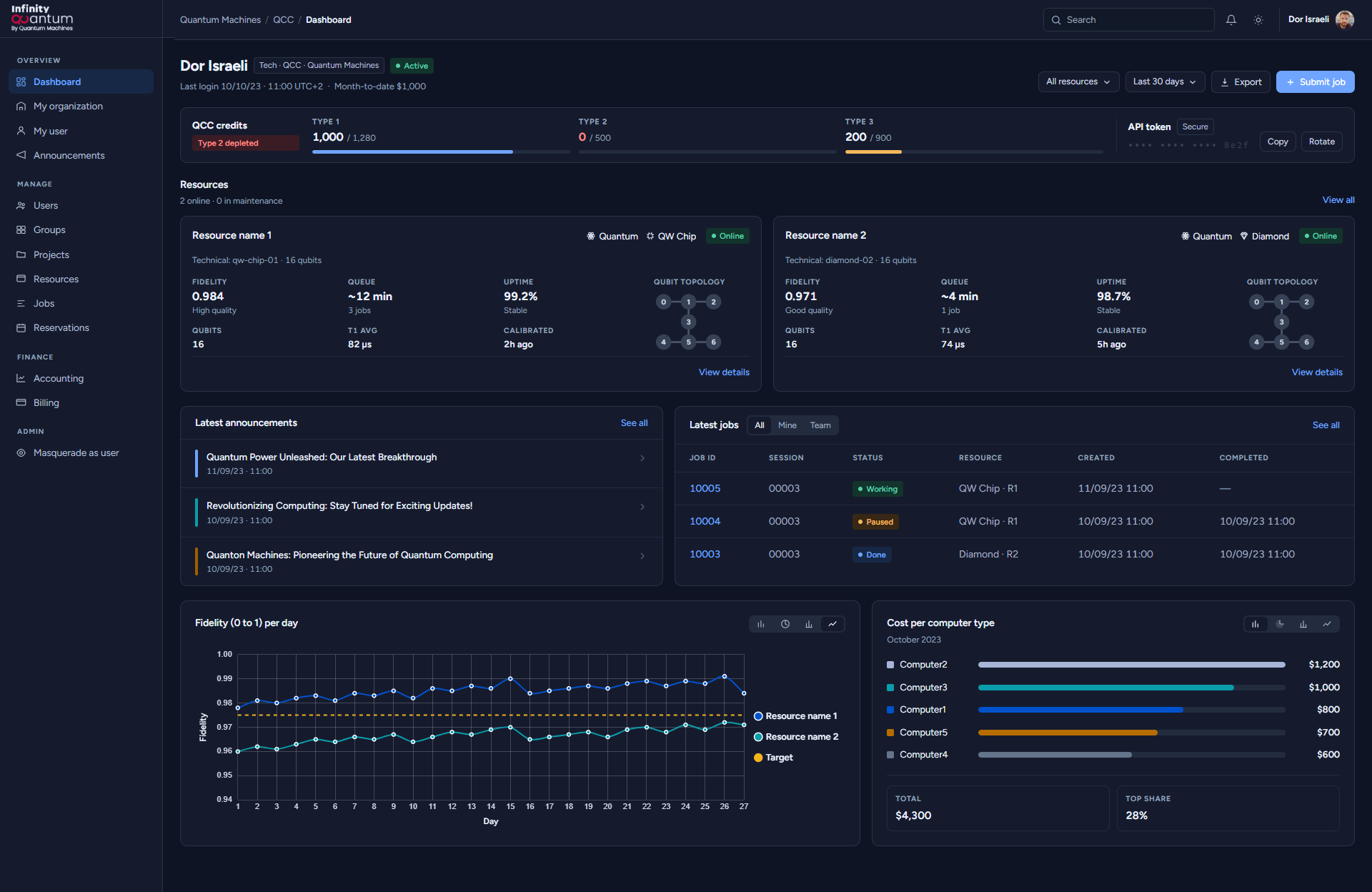
Decision-making was unpredictable due to scattered data across multiple disconnected views. Users had to context-switch constantly to find job statuses.
Infinity Quantum is a hybrid Quantum + HPC platform used by researchers, engineers, and administrators to run experiments, reserve QPUs, monitor jobs, and manage scientific teams through one coherent system.
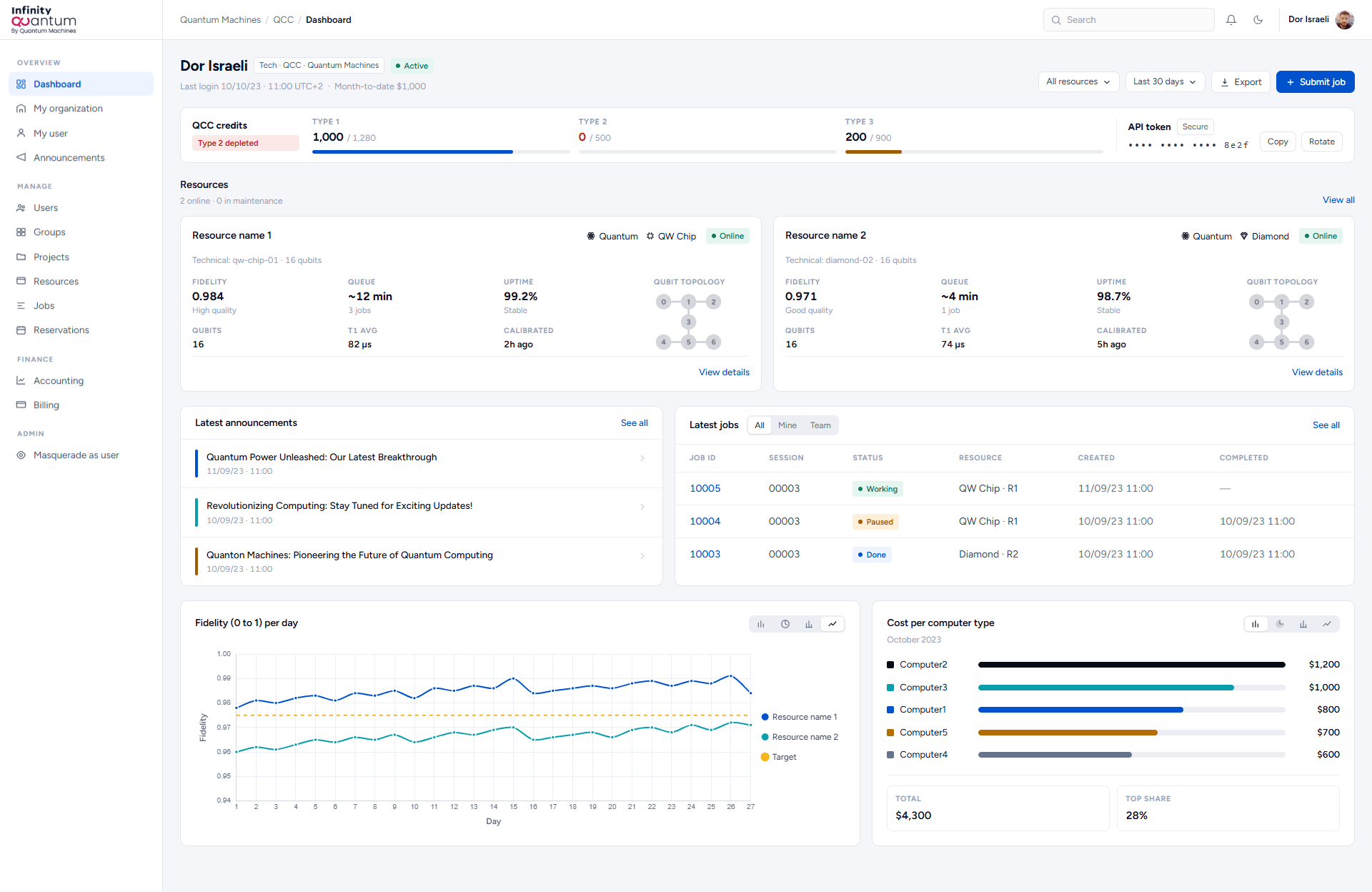
Infinity Quantum needed a product experience that could carry highly technical workflows without burying users in operational noise. The redesign kept the platform's technical depth intact while rebuilding the experience around clarity, decision support, cost transparency, and trust for both expert and non-technical users. The work focused on better pricing visibility and faster access to the information needed for critical experiment decisions.
Quantum researchers and engineers faced a fragmented, high-complexity interface that hindered experimentation. The existing tools forced users to navigate scattered data, leading to costly errors and inefficient resource usage.
Decision-making was unpredictable due to scattered data across multiple disconnected views. Users had to context-switch constantly to find job statuses.
High cognitive load with unclear implications for costs and resources. Engineers often launched expensive jobs without knowing the final price tag.
No optimized dark mode and dense tables without hierarchy caused severe eye strain during long monitoring sessions typical in quantum experiments.
Analyzed competitors such as AWS Braket, IBM Quantum, and Azure to identify gaps in cost transparency and usability for non-experts.
Progressed from low-fi wireframes to a cohesive hi-fi design system, validating logic with users at each stage.
Reorganized dense workflows around hierarchy, cost trust, and clearer operational states.
Added clearer entry points, feedback loops, and safer configuration flows for high-cost actions.

Quantum Researcher
Runs complex experiments and depends on clear visibility into jobs, logs, calibration data, and resource availability.

Operations / Admin Lead
Responsible for approvals, reservations, and organizational consistency, and needs fast administrative control with reliable system visibility.

Team Manager
Oversees team performance, resource costs, and system-wide clarity, and needs structured insights without jumping between disconnected screens.
Researchers wasted hours cross-referencing SLURM logs, status codes, and error messages scattered across multiple pages. This cognitive overload led to missed errors and idle resources burning budget.
"I no longer need 5 tabs open just to check if my experiment failed." - Senior Quantum Engineer
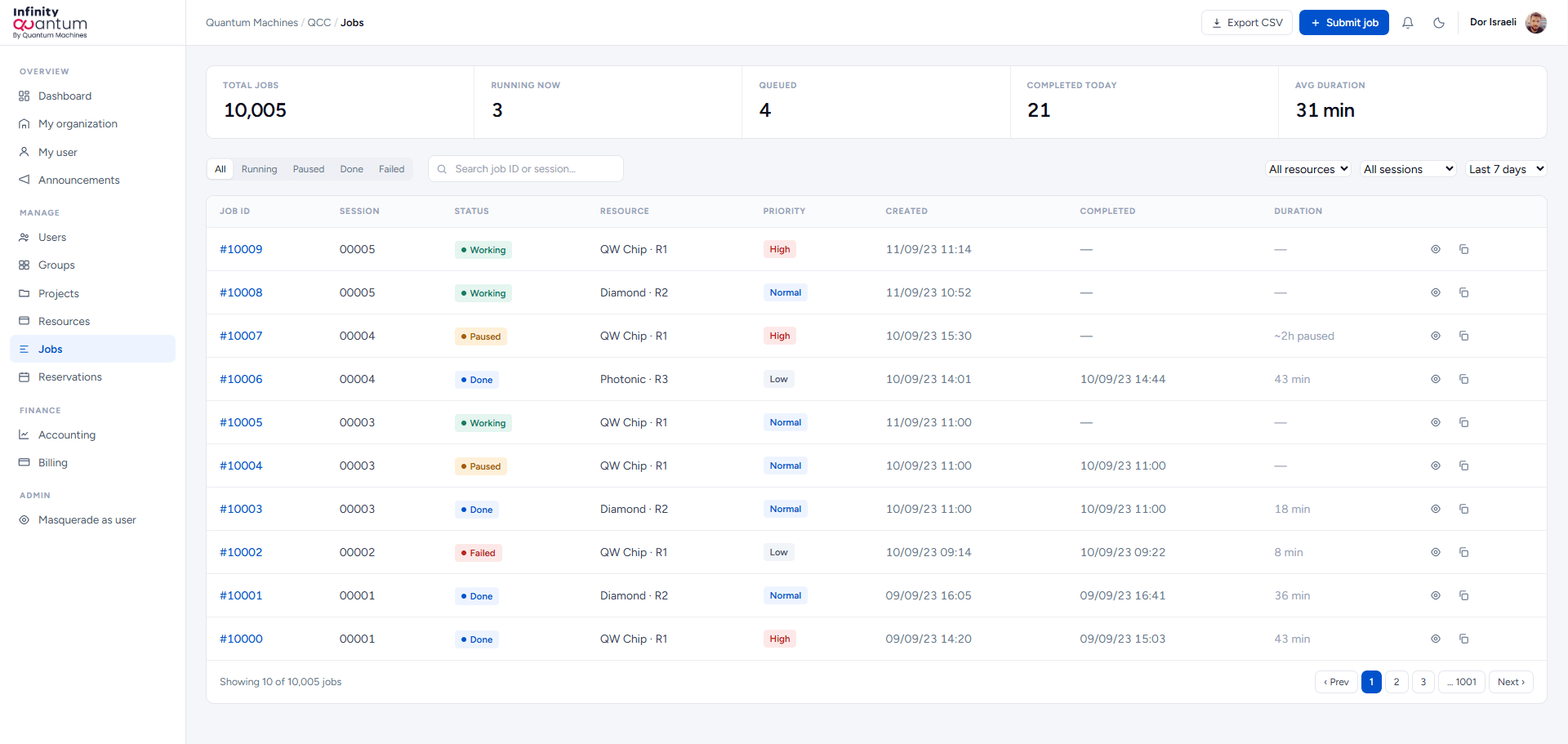
Job list scanning. Shows all runs, status, priority, resource, and filters in one table so engineers can spot active, paused, or failed jobs quickly.
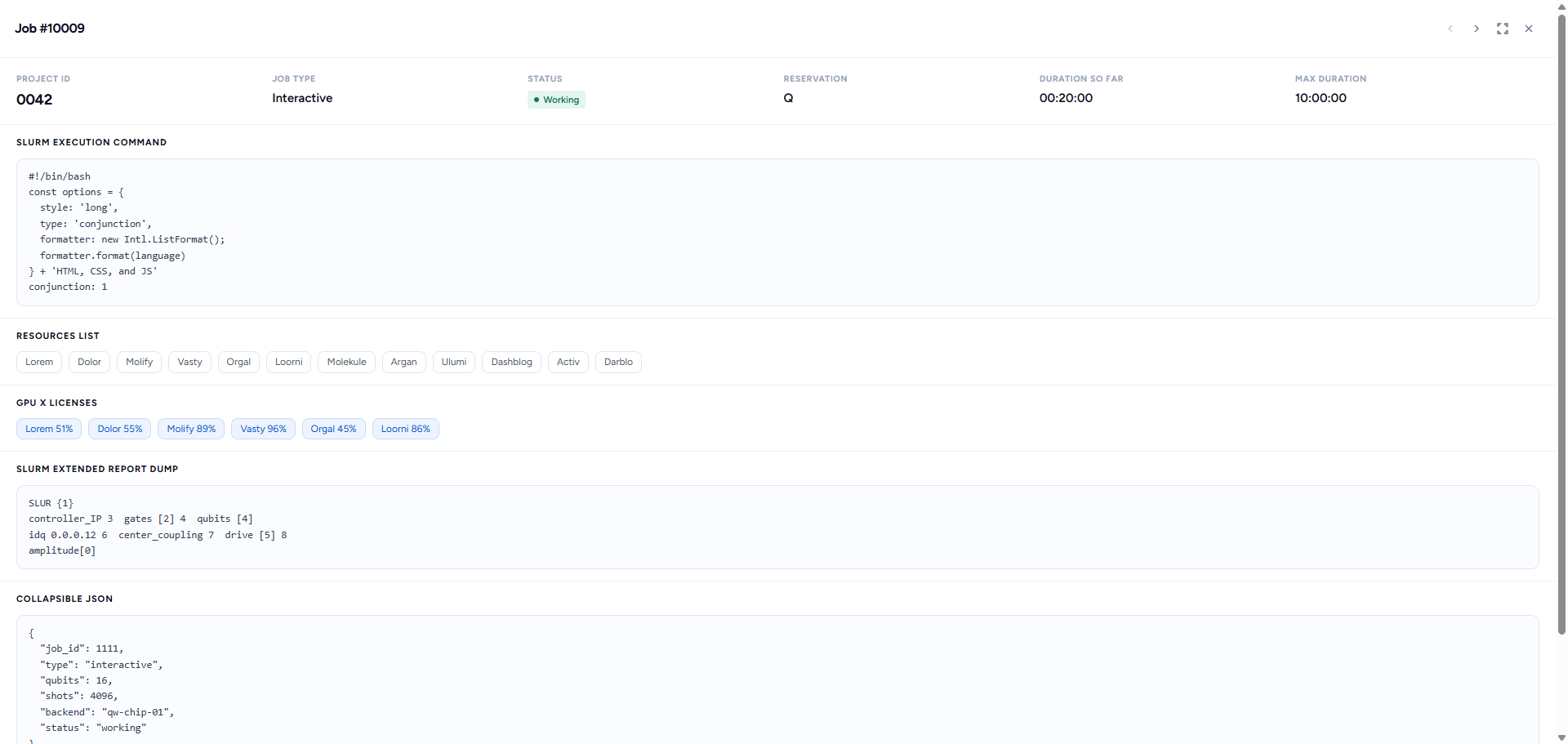
Deep job inspection. Opens SLURM command, resource list, licenses, JSON, and generated summary in one place, reducing tab switching during troubleshooting.
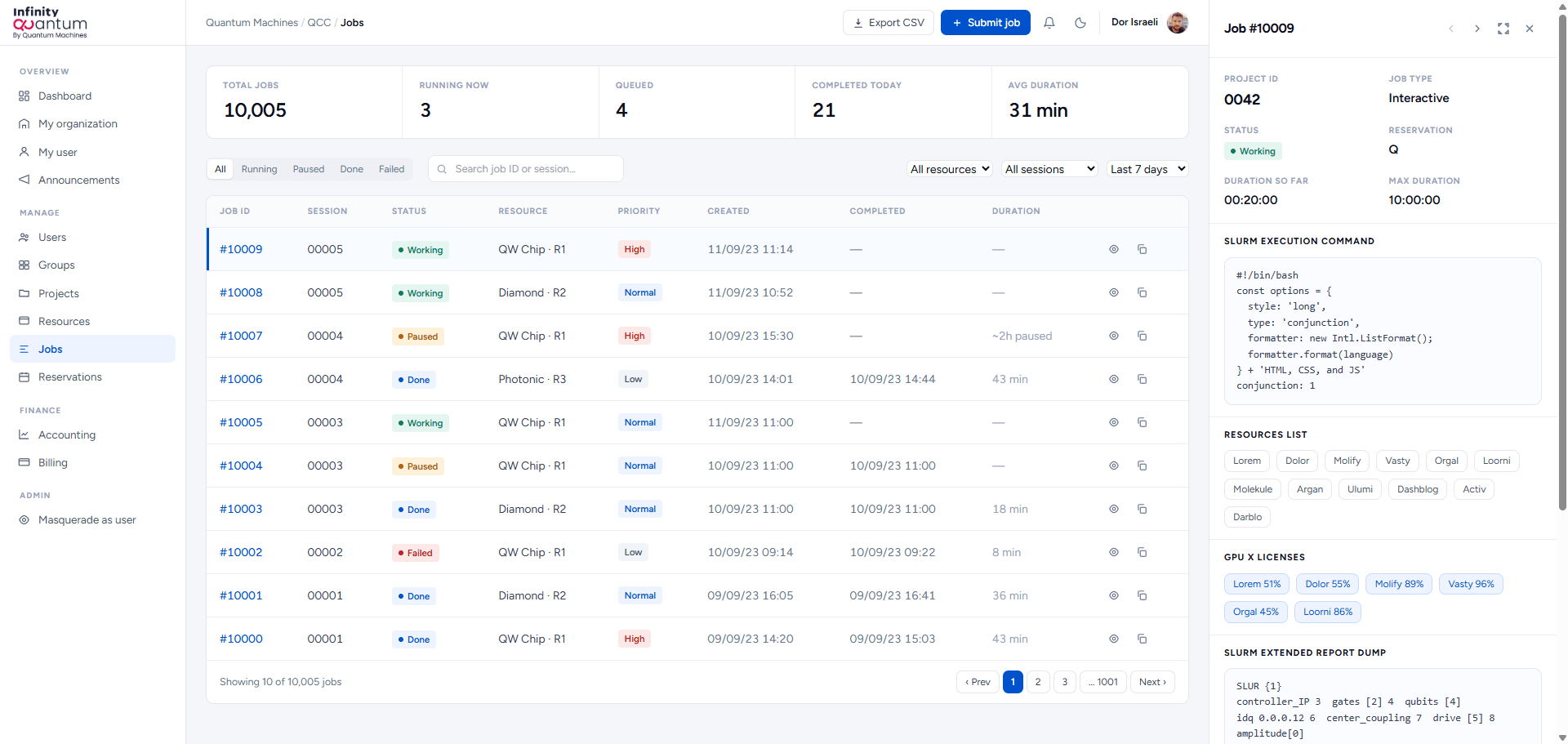
Contextual side panel. Keeps the jobs table visible while details open on the side, helping users investigate a run without losing their place.
Dark mode was designed as an operational layer for engineers and researchers monitoring live jobs over extended sessions. The interface preserved hierarchy, signal contrast, and chart readability while reducing visual fatigue in low-light lab environments.
Users feared unexpected charges due to a lack of real-time cost visibility. Multi-step forms without previews led to high abandonment rates, as researchers could not verify budget fit before committing.
Reduced over-provisioning and lowered onboarding friction for non-technical users.
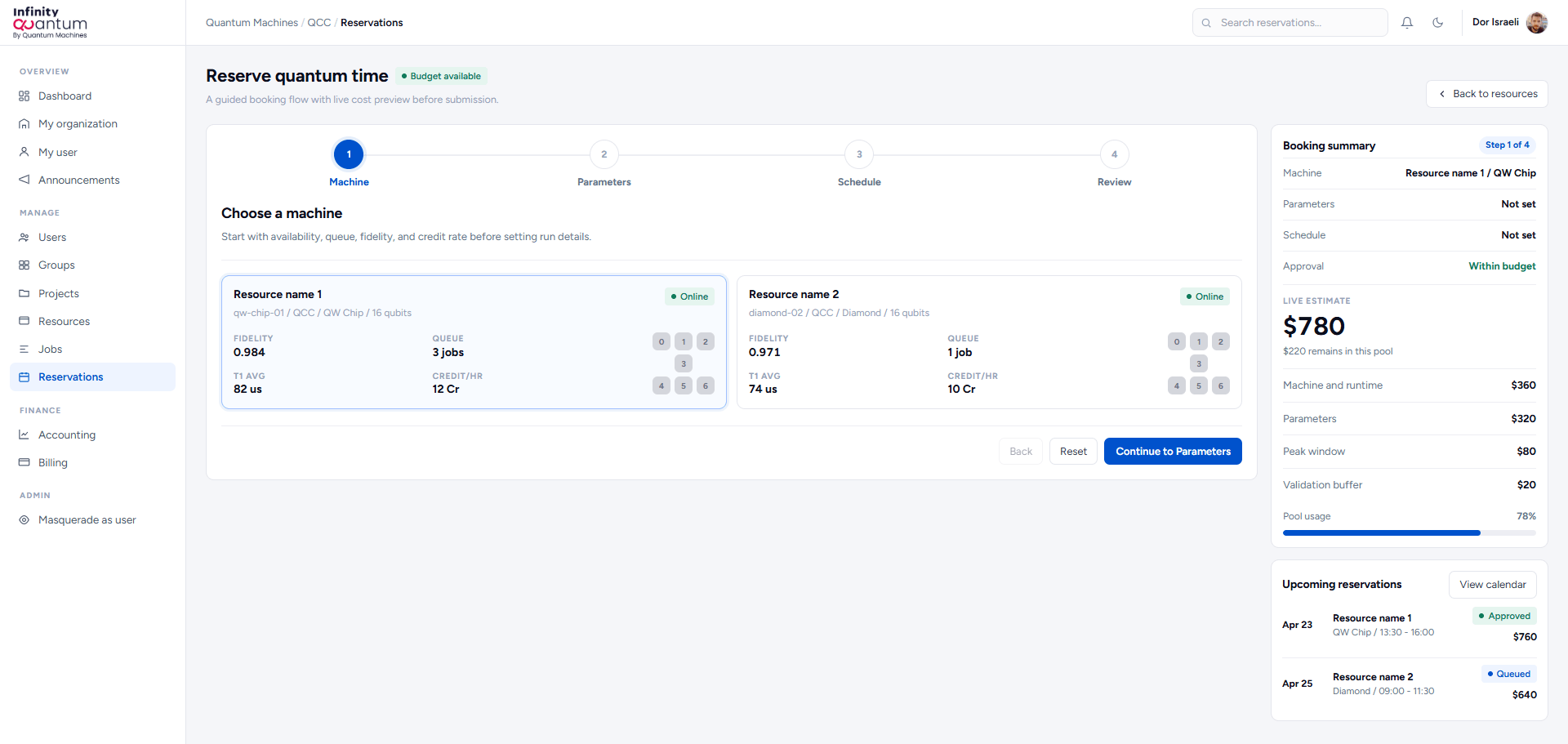
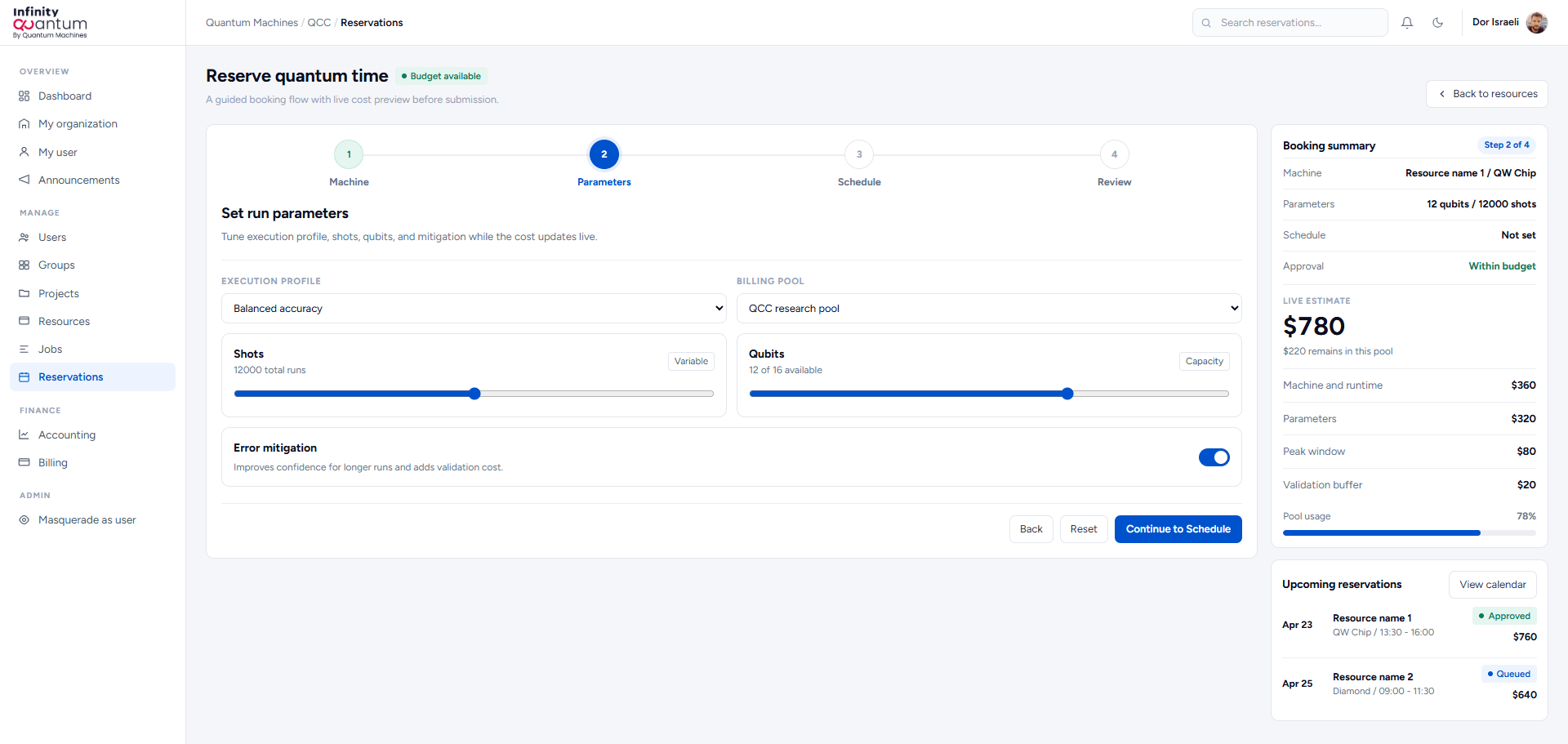
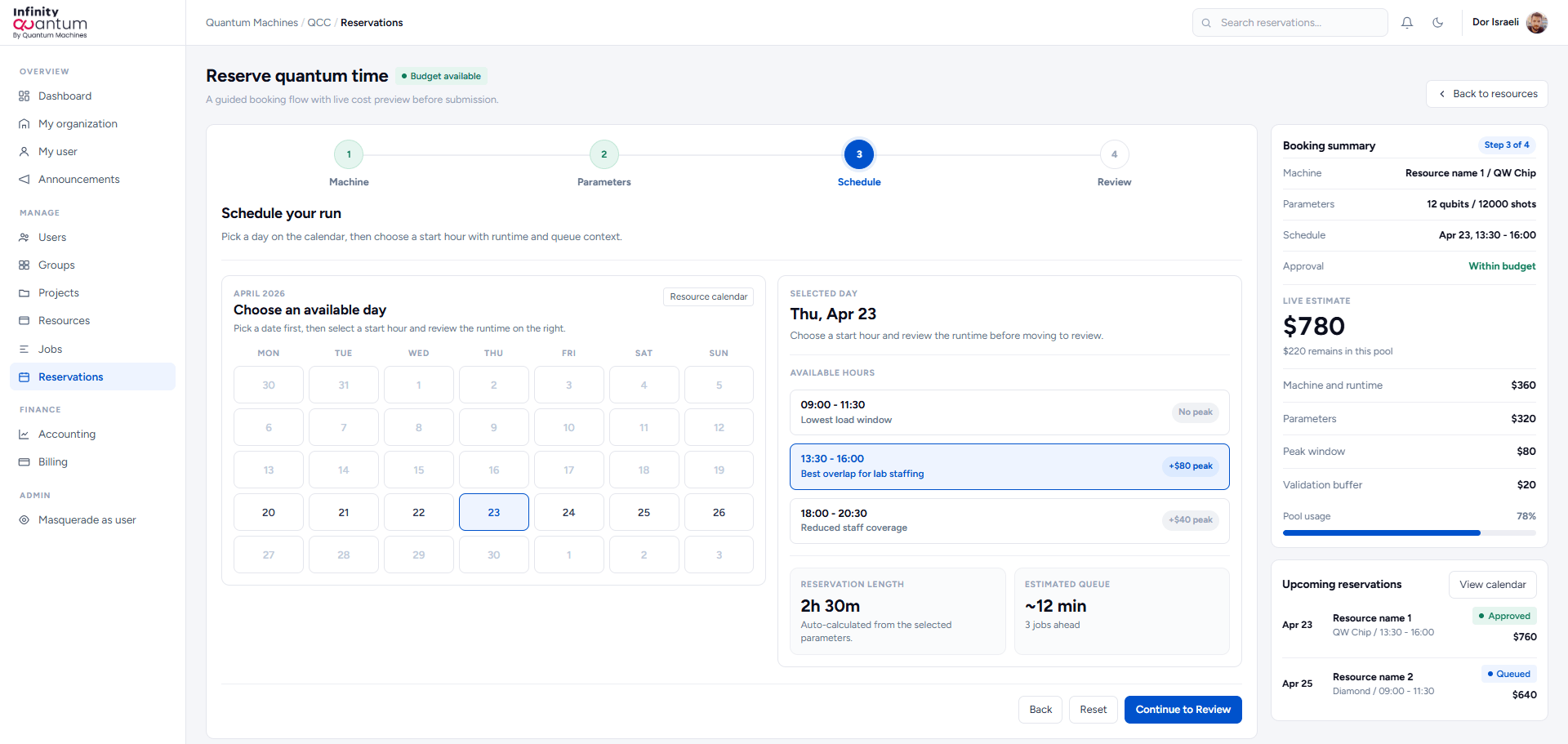
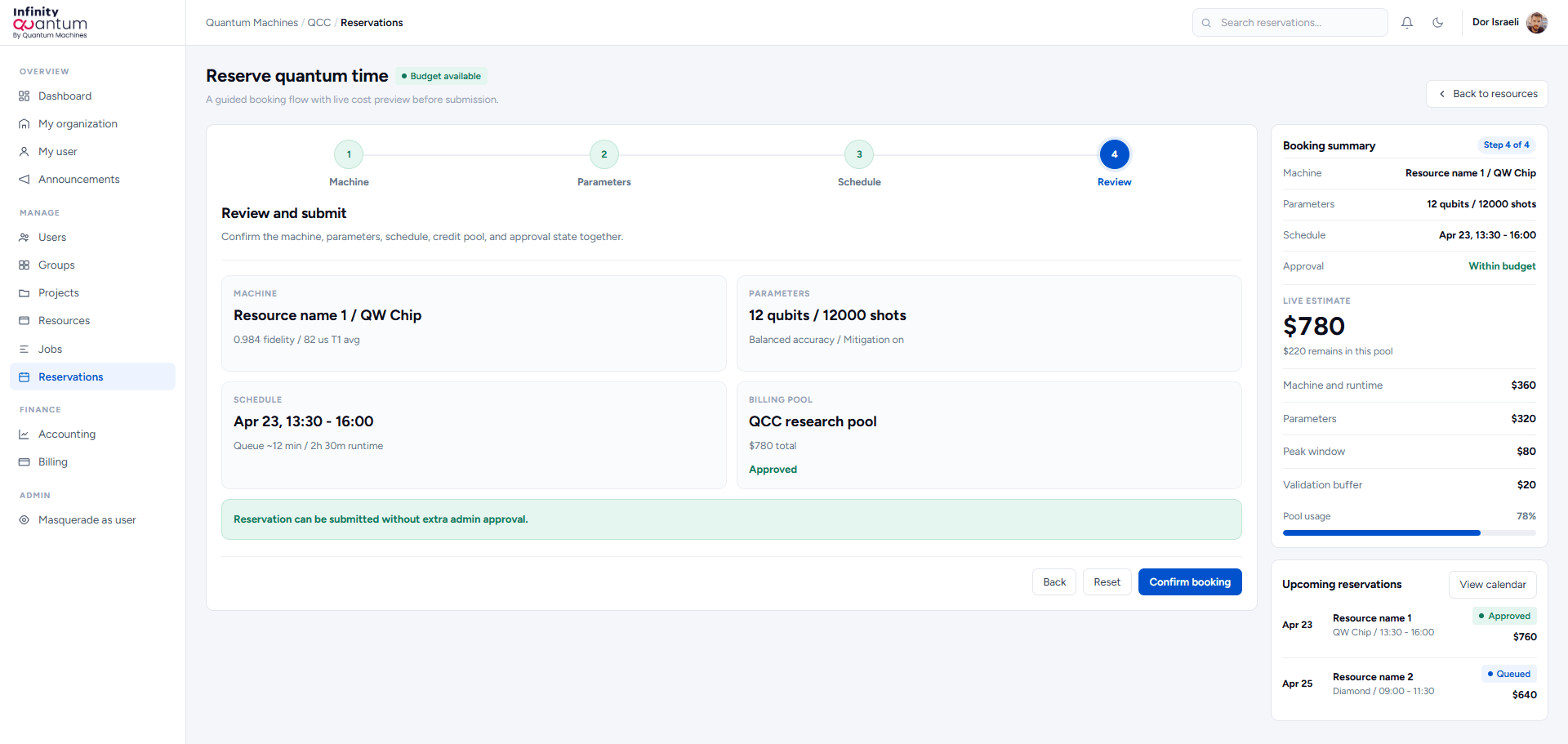
Machine selection. Compares resource type, fidelity, queue, and credit rate before the user commits to a run.
Parameter tuning. Updates cost in real time while shots, qubits, and mitigation are adjusted.
Schedule planning. Keeps the calendar, slots, runtime, and queue visible together so teams can pick a viable window faster.
Review before submit. Summarizes the full reservation with cost and approval state before booking is confirmed.
Not every system check happens at a workstation. The mobile surface distilled Infinity Quantum into a faster monitoring layer for active jobs, machine state, and cost-sensitive signals without reopening the full desktop workflow.
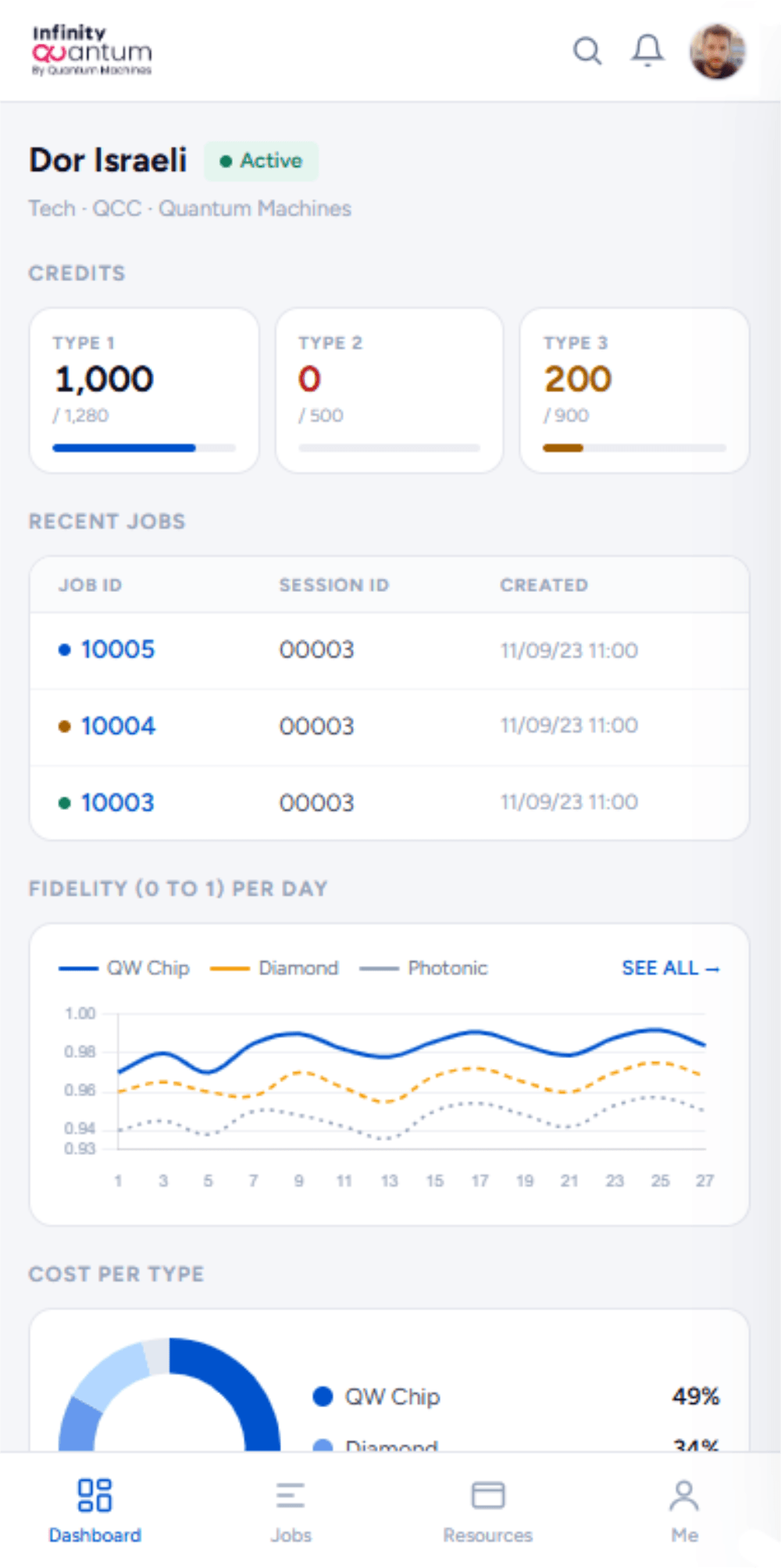
The redesigned platform improved operational confidence and made quantum infrastructure easier to use at enterprise scale.
Balancing quantum complexity with enterprise usability revealed critical insights that shape the future roadmap of the platform.
In high-density quantum workflows, showing everything at once paralyzes users. Hiding complexity until requested dramatically reduces cognitive load without sacrificing technical depth.
For engineers monitoring jobs over long shifts, a high-contrast dark interface is an accessibility requirement that helps prevent eye strain and fatigue errors.
Real-time cost feedback shifted behavior from fear of clicking to confident experimentation. Predictability is key to unlocking usage in enterprise settings.
I design product experiences that bring clarity to complex systems.