Type designers
Build a starting system faster, then refine individual glyphs without giving up direct control.
DNAFonts is a working font studio for creating typefaces from a prompt, a blank canvas, a reference glyph, or a style sample. I designed and built the product surface and the generation engine around batch glyph work, live design axes, QA feedback, and exportable font files.
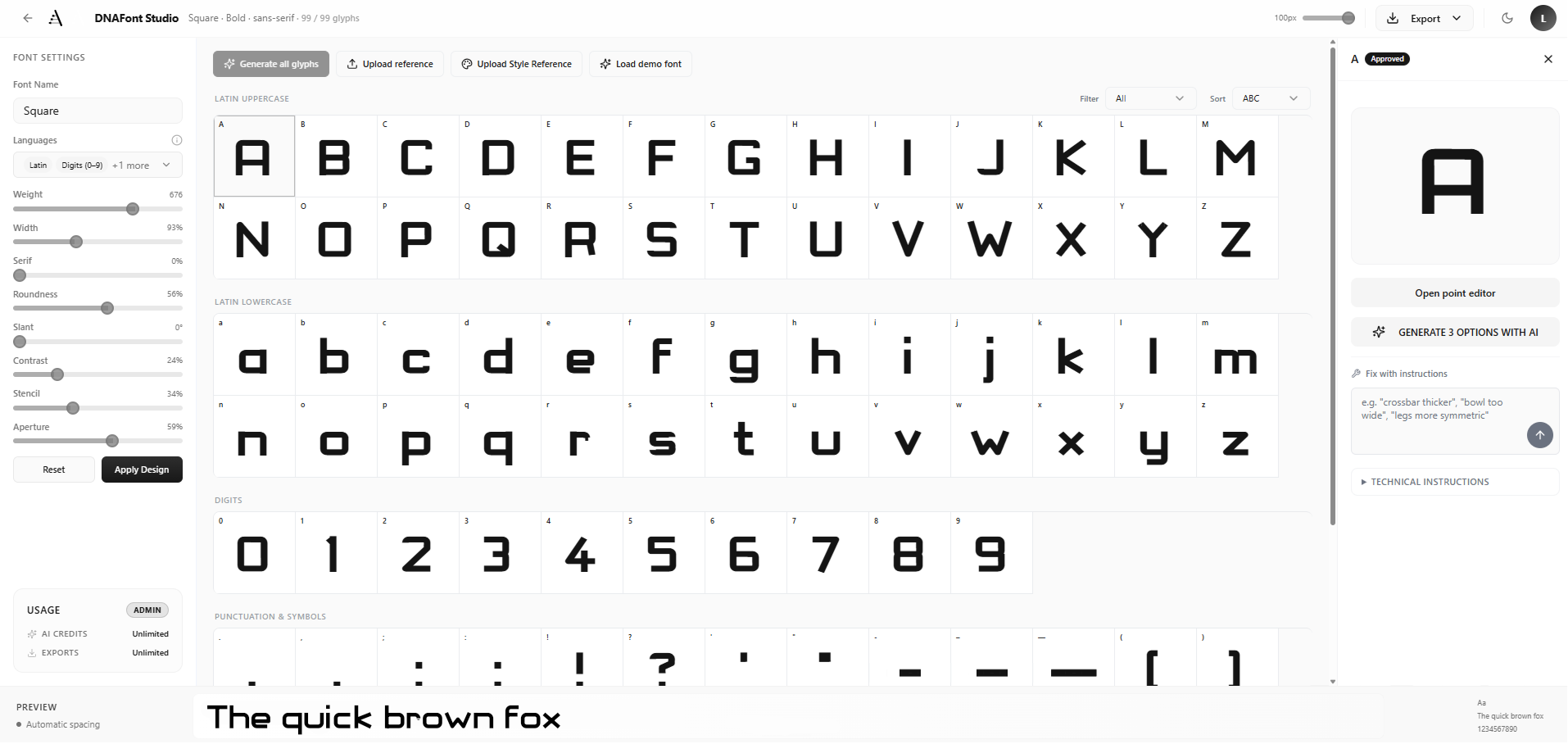
Type design is a deep craft: metrics, spacing, contours, character sets. The current DNAFonts work makes that craft inspectable: every glyph has a state, every AI action can be scoped, and every generated outline can be previewed before it is accepted.
DNAFonts gives people with different levels of type expertise a clear way into font creation while keeping the result editable.
Build a starting system faster, then refine individual glyphs without giving up direct control.
Turn a written brief or visual reference into a custom typeface that can still be edited and tested.
Explore directions, scripts, and design axes together before committing a font to production.
DNAFonts supports Latin, Hebrew, Arabic, Cyrillic, and Greek. Choose the scripts a project needs, then tune eight design axes while the text updates below.
Font editors are built for type designers. Cap height, kerning, contours, and large character sets can overwhelm people who only need a useful brand font.
Outputs cannot be trusted just because they render. The system needs style references, anatomy checks, and clear failure states.
A serious font is dozens of decisions. The interface had to support one-glyph fixes and group work without overwriting finished outlines.
Mapped how a reference glyph becomes reusable structure: stems, corners, counters, spacing, and style rules.
Designed the flow from creation path to glyph grid, live preview, inspector, batch actions, and export.
Reviewed generated glyphs by completion, visual consistency, and hard anatomy failures.
Iterated on the working product and checked the full flow from intake to export.
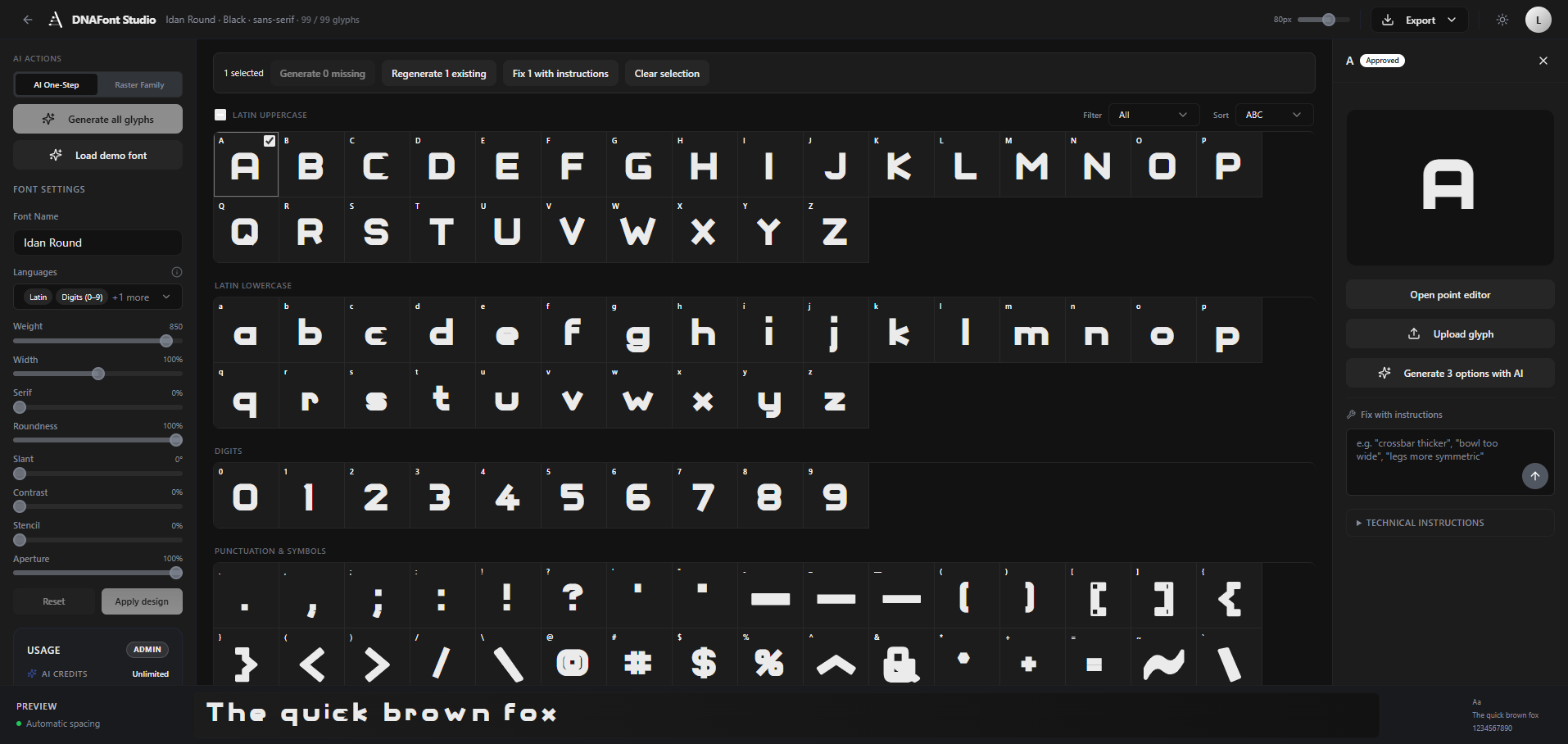
The main studio keeps the character set, selection state, design controls, AI actions, and live preview visible in one flow.
Creation actions stay explicitGenerate all, upload reference, upload style reference, and load demo font remain visible where work begins.
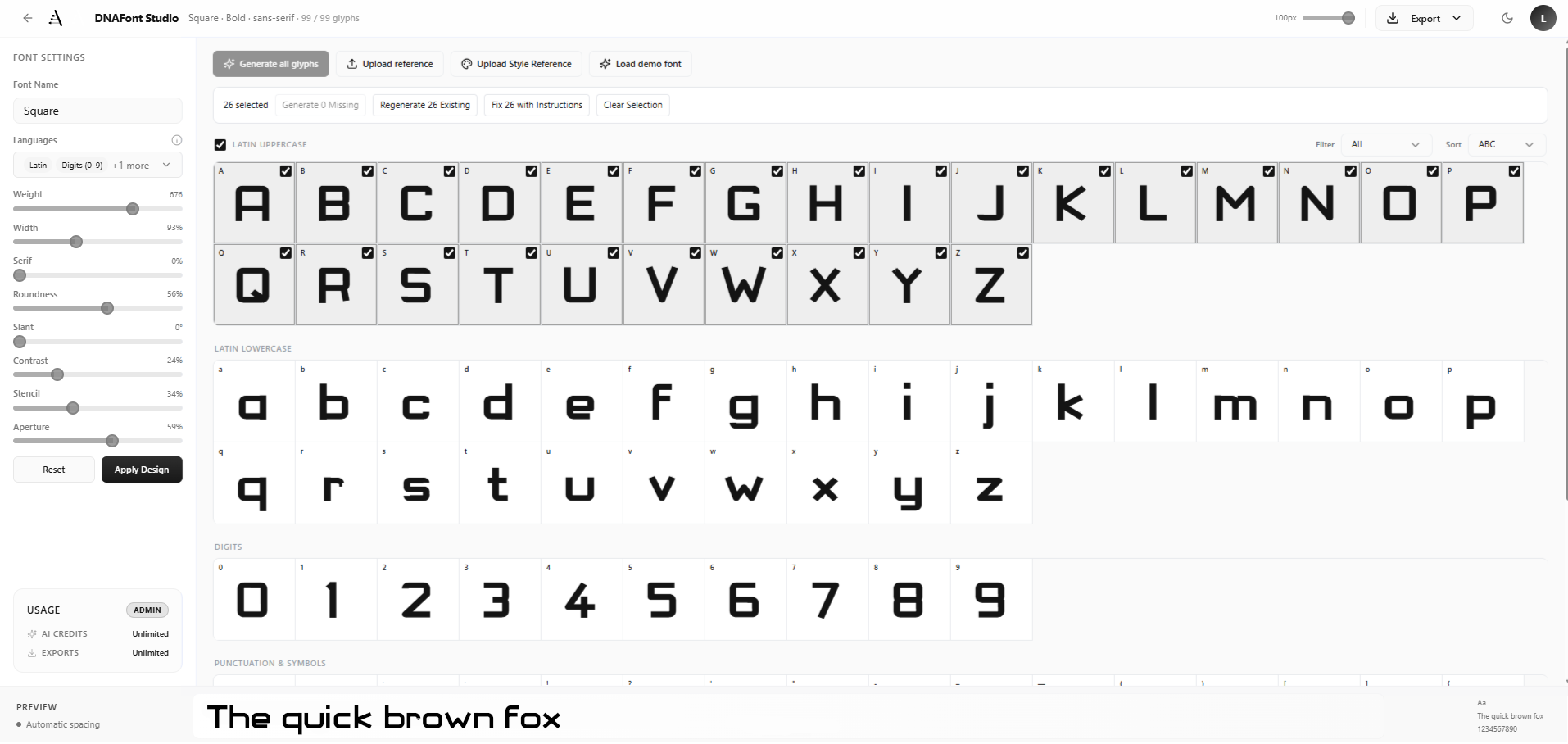
The grid explains scopeThe 99 of 99 count, status dots, and group checkboxes show what exists, what is selected, and what still needs work.
The settings panel carries the type systemLanguages and design axes sit beside the glyphs, so the font can be shaped while it is being reviewed.
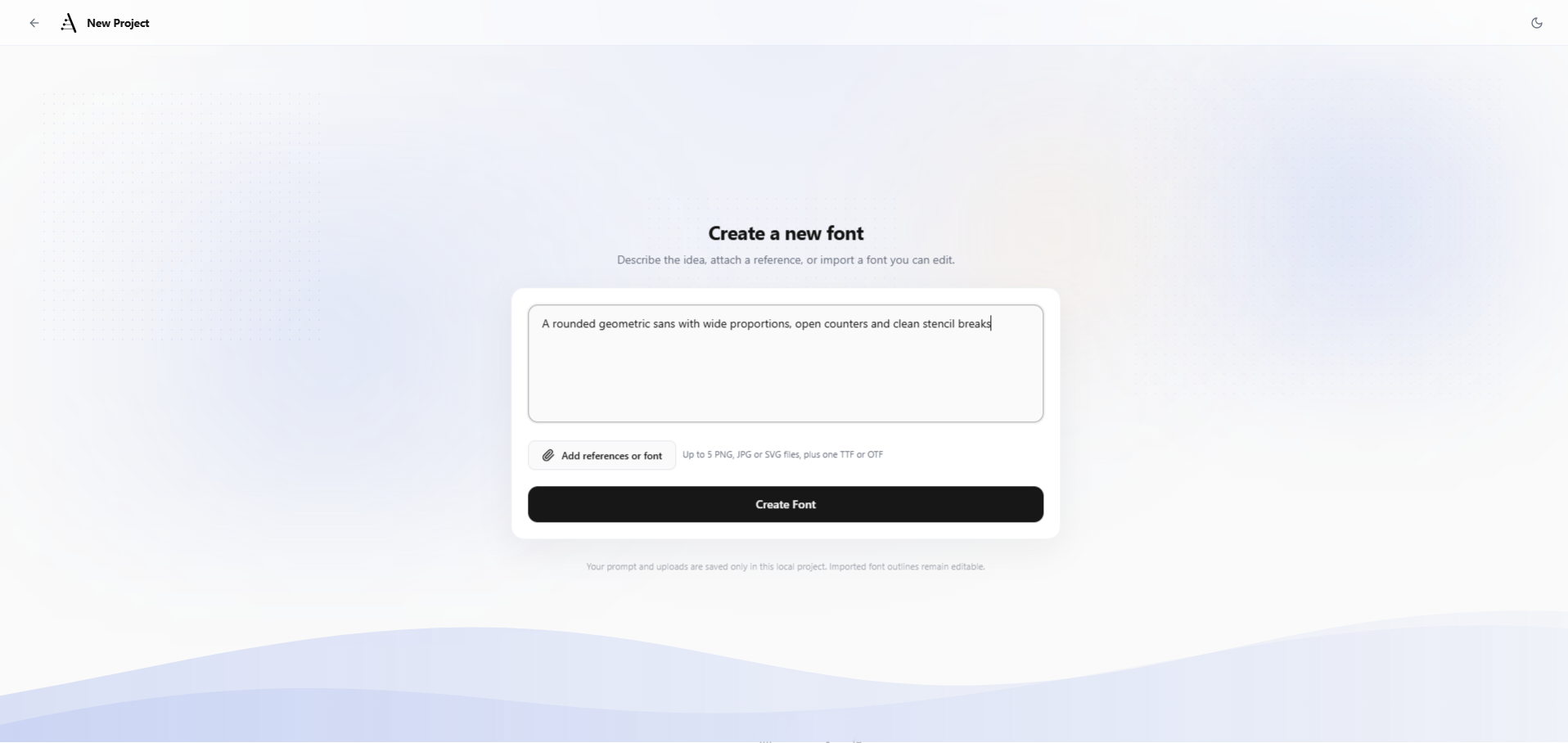
A font can start from a prompt, a blank setup, a source glyph, a style reference, or an editable font file. Splitting those into separate doors made the first step feel like choosing a mode before shaping the idea.
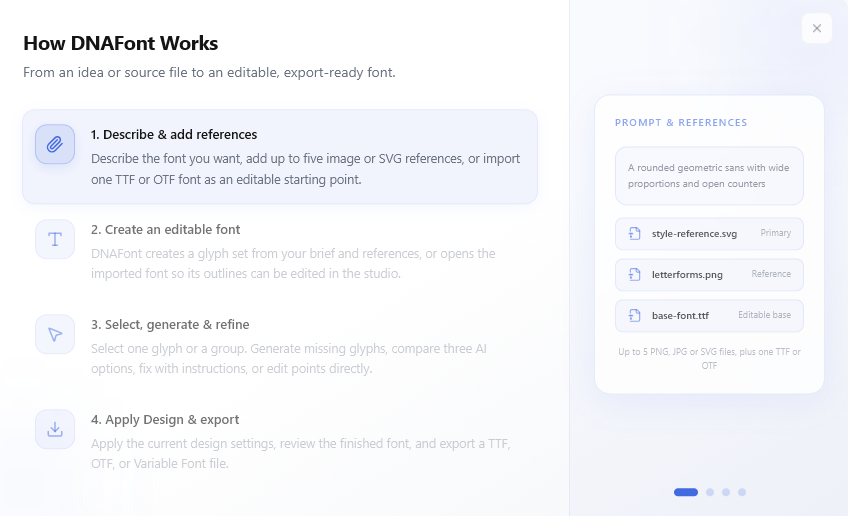
The product problem is trust. A generated font can look close at a glance, but a single weak glyph can break the set. DNAFonts keeps quality visible so users can see what needs review, fix the right scope, and continue without losing finished work.
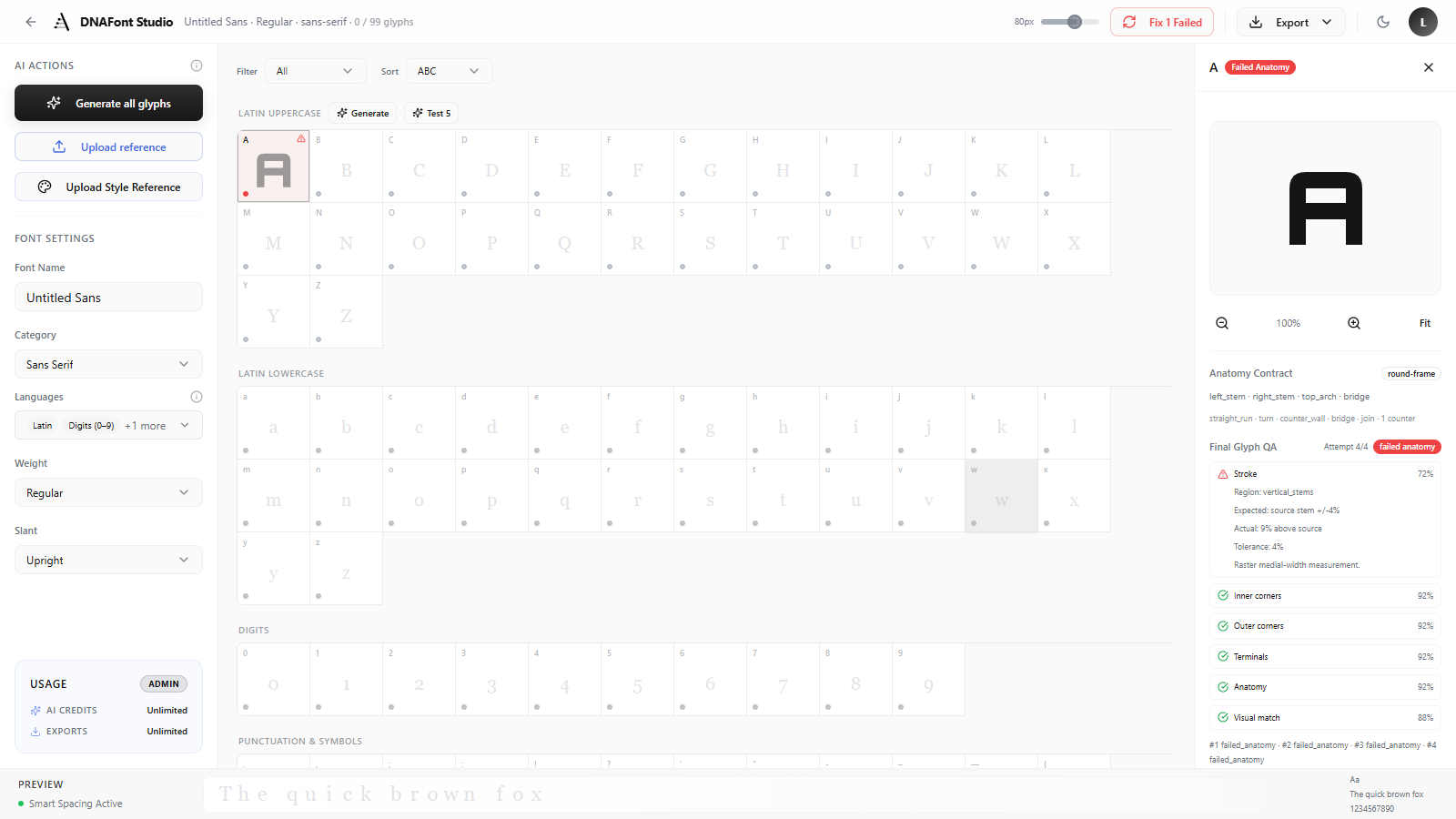
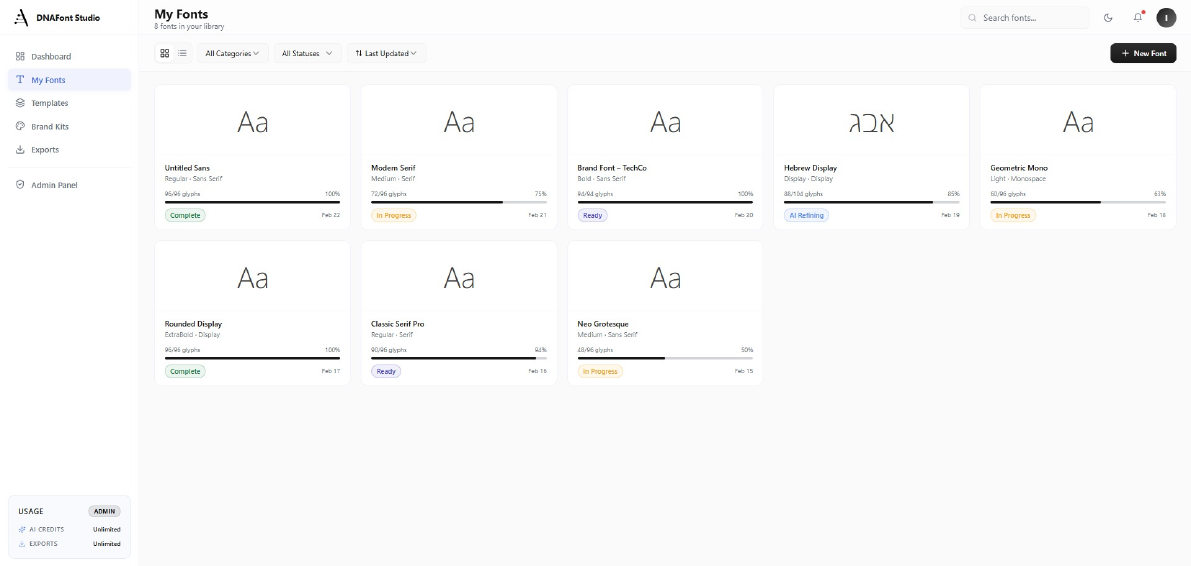
A set can be almost complete, but one letter that does not match the rhythm, weight, or construction of the series makes the result feel unreliable. The user needs a way to fix that one glyph without restarting the font.
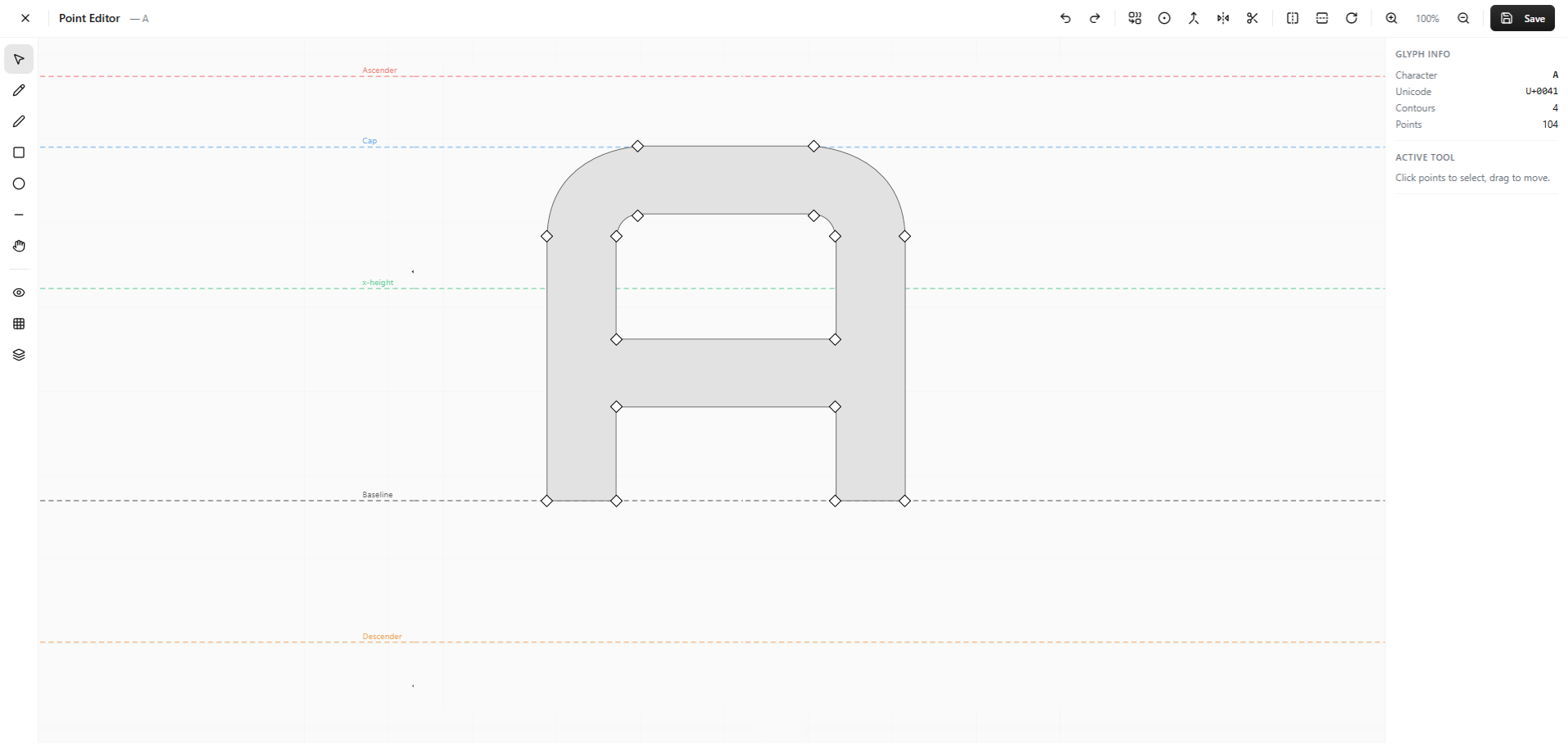


Edit points directly. Open the Point Editor when the AI is close but the final outline needs manual vector control.
Generate alternatives. Create three new options when the glyph is off but the style direction still works.
Fix with instructions. Describe the exact issue, such as a crossbar or symmetry problem, and keep the fix scoped to that glyph.
Upload a source glyph. Drop a PNG, JPG, or SVG when the user already has the right shape to analyze.
Users can forgive imperfect generation when they can choose the target, preview the result, and decide whether it gets applied.
A glyph that looks plausible can still fail. Anatomy checks and review states gave the interface a more honest definition of quality.
The grid is not only a gallery. It carries progress, selection, status, batch operations, QA feedback, and the path back into manual editing.
I design product experiences that bring clarity to complex systems.
