
IDAN SHADI
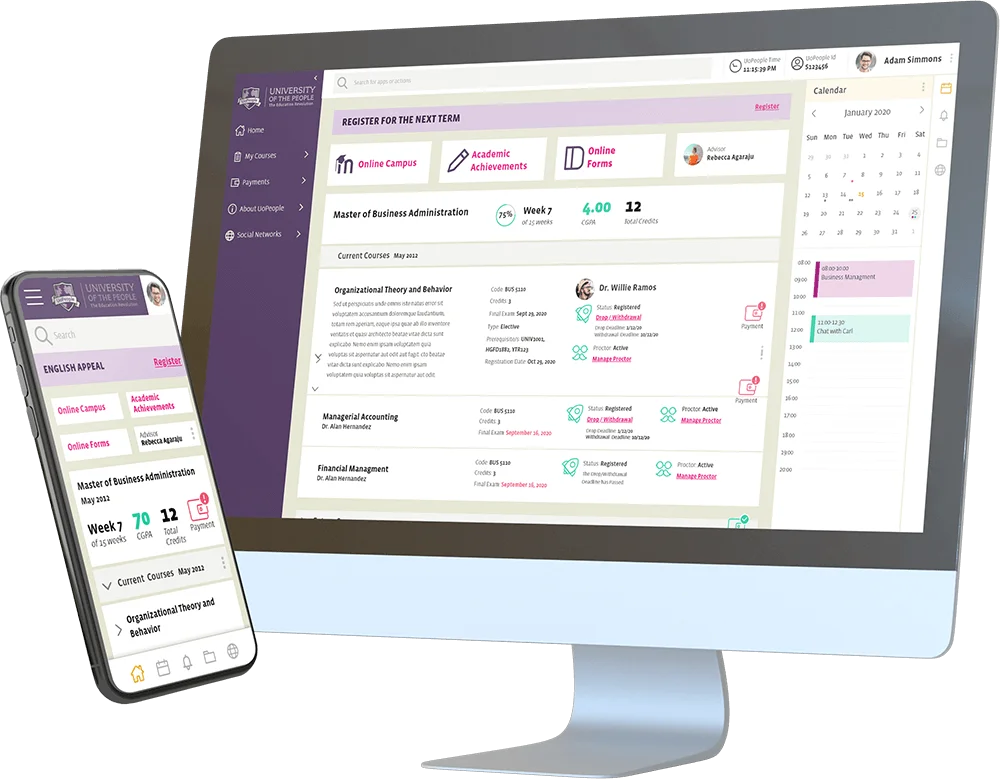
Embark on a journey of redesigning the University of the People Students Portal, where chaos transformed into clarity.
A UX case study on turning a confusing academic portal into a clear, student‑centered experience.
Mar - Apr 2023
Website/ WebApp
UX Designer &
Researcher
University of the People (UoPeople) is a nonprofit, fully online university serving students around the world. The Student Portal is the primary place where students manage their academic lives accessing courses, tracking progress, completing tasks, and finding critical information.
When I joined the project, the existing portal had grown complex over time. Students struggled to find what they needed, complete tasks efficiently, and understand where to go next. The experience felt fragmented, technical, and difficult to navigate especially for busy students balancing coursework, jobs, and personal responsibilities.
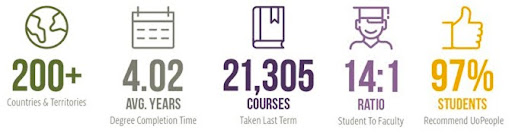
University of the People (UoPeople) is an online university, founded in 2009. It’s nonprofit, has no physical campus, and students learn online. The admission office is in California.
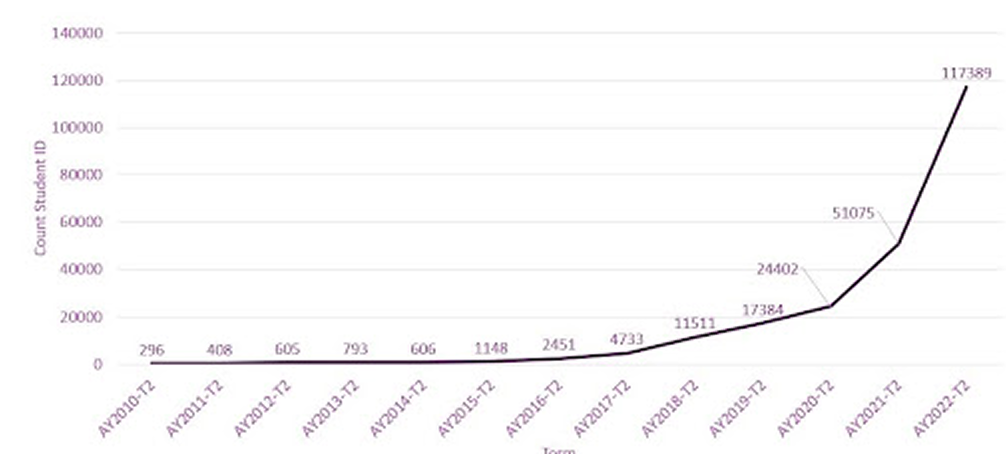
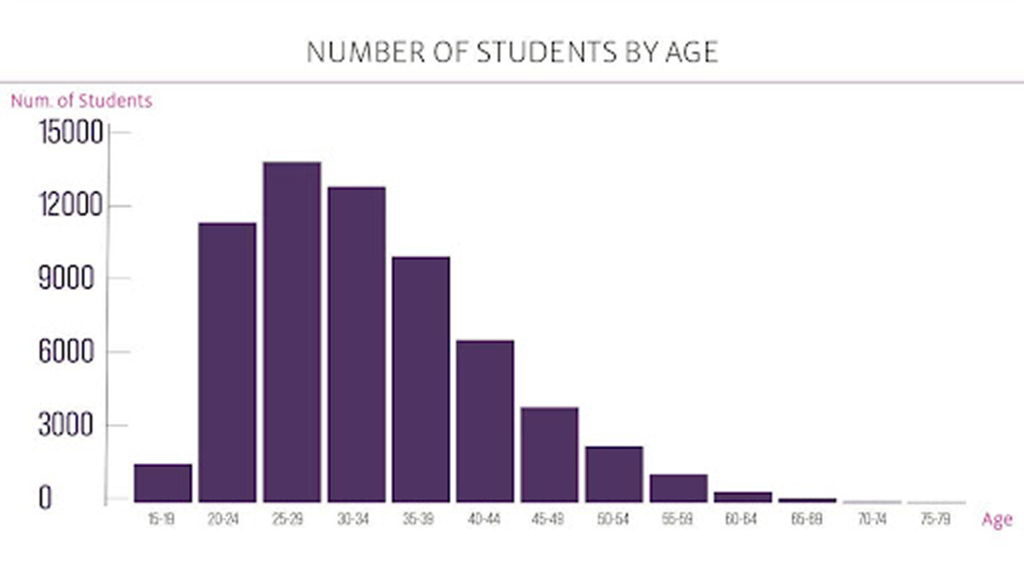
“When I first joined the University, I took a closer look at our student demographics and found that a significant chunk falls within the young age bracket, roughly between 20 to 40 years old. With this insight, I made a conscious decision to revamp our design strategy, aiming to establish a stronger connection with our youthful audience.
mapping key tasks such as running
Understand why students struggled with the existing Student Portal and identify opportunities to improve clarity, navigation, and task completion.
"How can we redesign the Student Portal so students can quickly understand their academic status and take action without confusion?"
We utilized a mixed-methods approach to gather both quantitative data and qualitative context.
Why This Method
Identify patterns at scale to understand the
prevalence of issues across the student body.
Why This Method
Understand frustrations in context and hear the
"why" behind the data directly from students.
Why This Method
Uncover structural UX issues and heuristic
violations in the current interface design.
Why This Method
Reveal friction in real workflows by breaking down
common student actions into steps.
Understanding who our students are and the constraints they operate under.
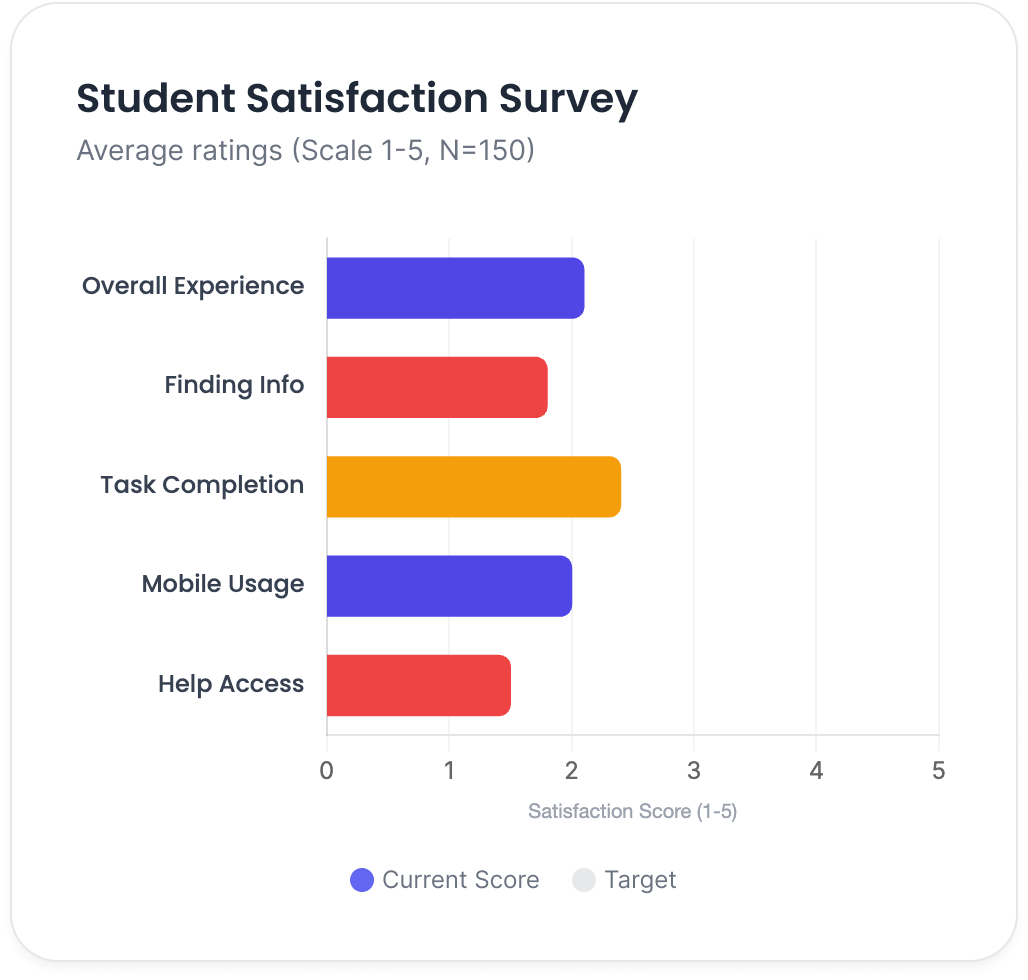
Finding basic course information was described as "difficult" and "buried," leading to support tickets.
We utilized a mixed-methods approach to gather both quantitative data and qualitative context.
"How satisfied are you with the current Student Portal experience?"
"How easy is it to find your specific course information?"
"Can you complete study-related tasks efficiently without help?"
"How would you rate the overall user experience on a scale of 1-10?"
"What critical features are currently missing or difficult to use?"
"What frustrates you the most while using the portal daily?"
Quantitative data and qualitative feedback reveal significant friction.
Average age range of active users
Remote learners requiring high system reliability

Students interact with the portal in short, focused sessions. They are time-poor and need
clarity immediately—not after exploration.
Based on our research findings, we established five core principles to guide the redesign.
Minimize clutter and steps to help students process information without mental strain.
Create consistent pathways so students always know where they are and how to return.
Group key academic status, grades, and tasks in one unified, easy-to-find location.
Highlight actionable items clearly to help students decide what to do next instantly.
Use a clean, approachable aesthetic to make the system feel supportive rather than strict.
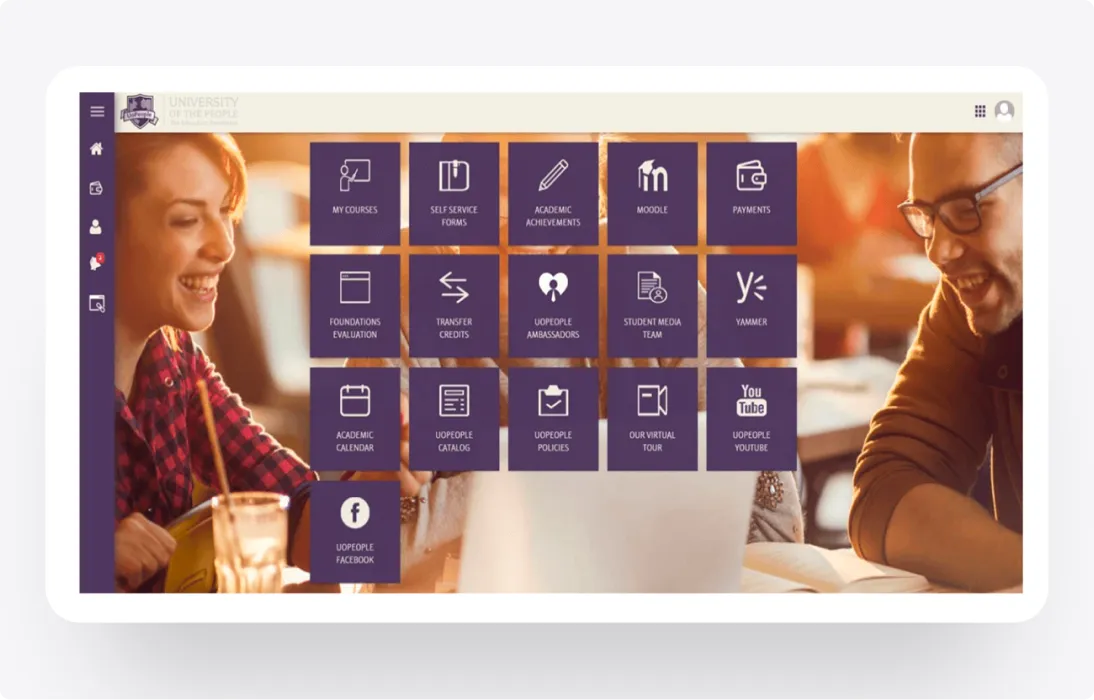
Since [Year], Uo people portal experience has not been changed. Here are the key problems with the core experience.
PROBLEM
Finding what you need in the Students Portal can be a bit tricky and frustrating. It’s like looking for a needle in a haystack, and that makes things slower and a bit of a hassle.
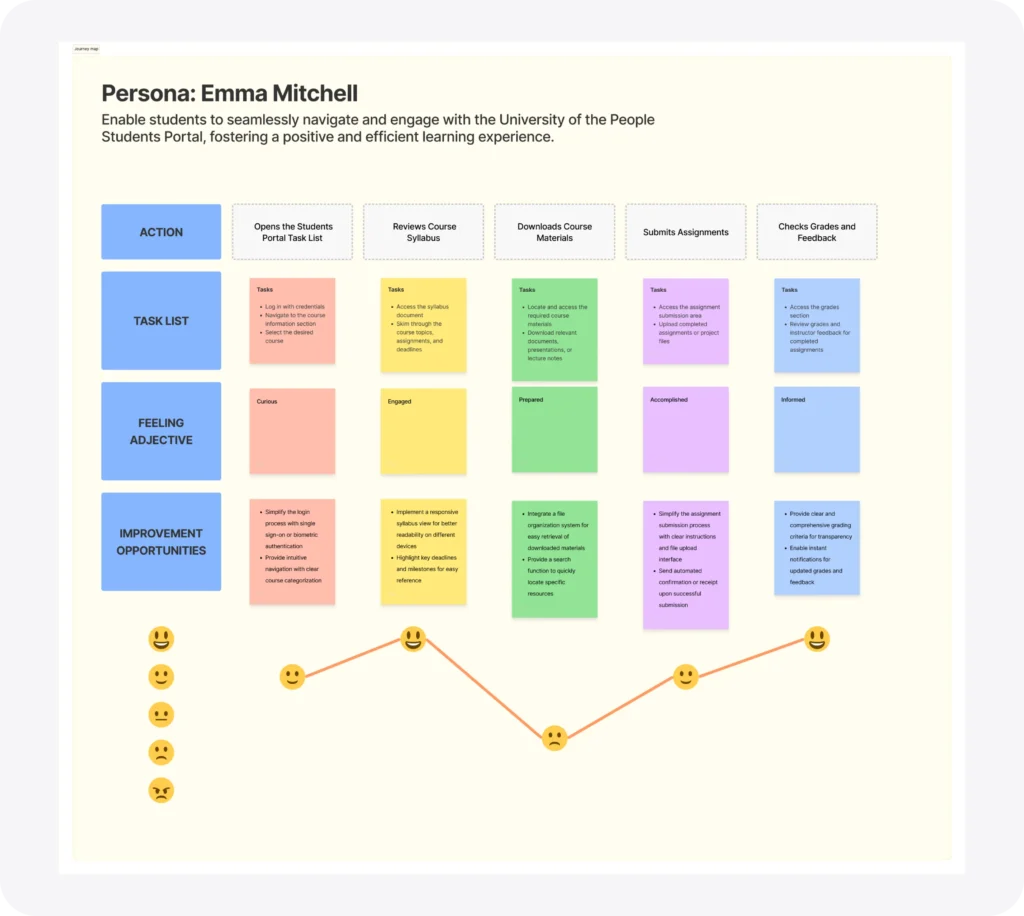
Busy student Emma Mitchell needs a Students Portal that’s super easy to use. She wants quick access to important info, smooth task management, and a simple, friendly experience. Without these tweaks, Emma’s academic journey might hit a few bumps, affecting her productivity and overall satisfaction.
Facilitate students’ seamless interaction and navigation through the University of the People Students Portal, cultivating a productive and favourable learning encounter.
We utilized a mixed-methods approach to gather both quantitative data and qualitative context.
Standard authentication process.
Repeated navigation between pages required just to locate current class.
Too many clicks to reach specific assignment details. Information buried.
No clear "next step" or confirmation after submission.
Session end.
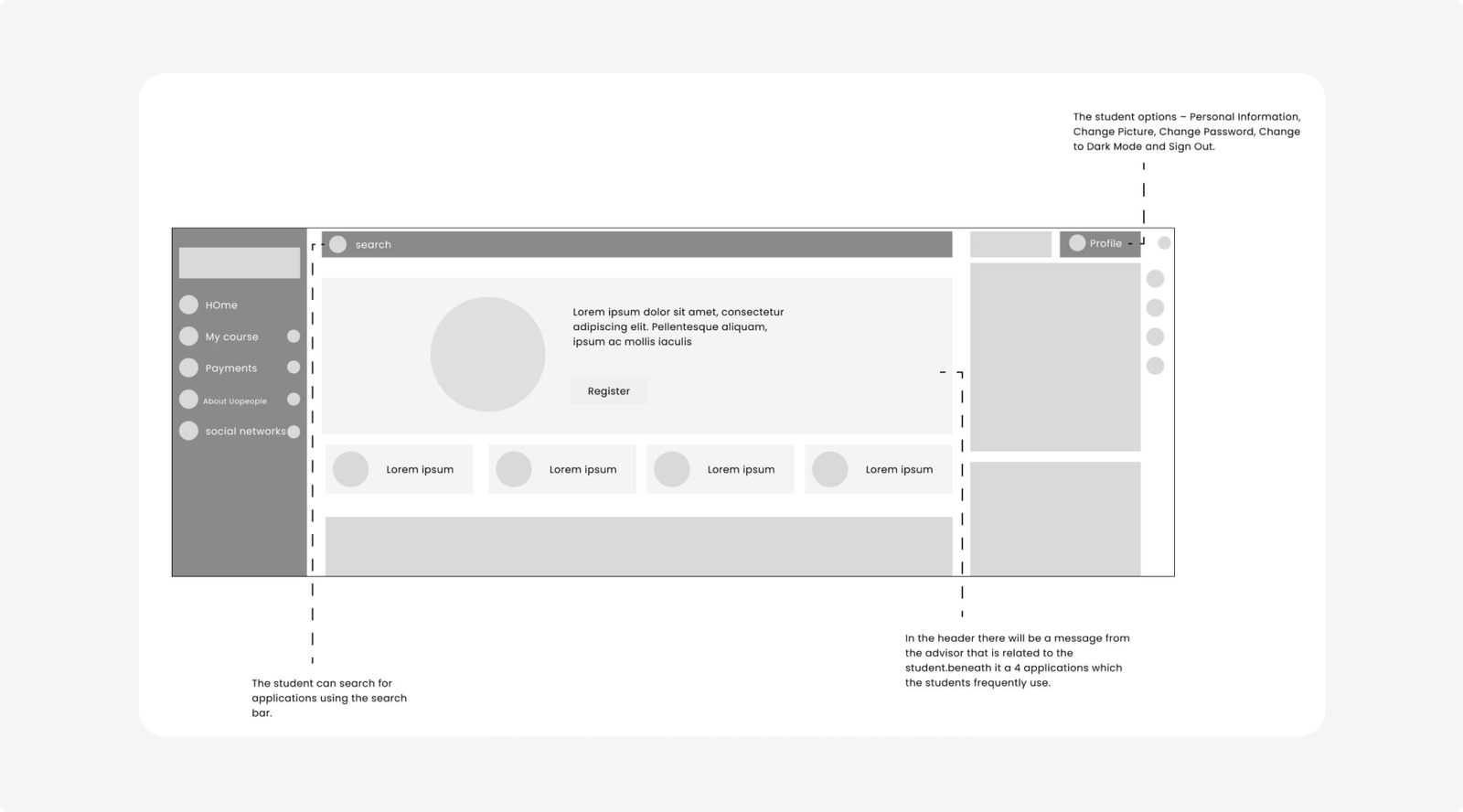
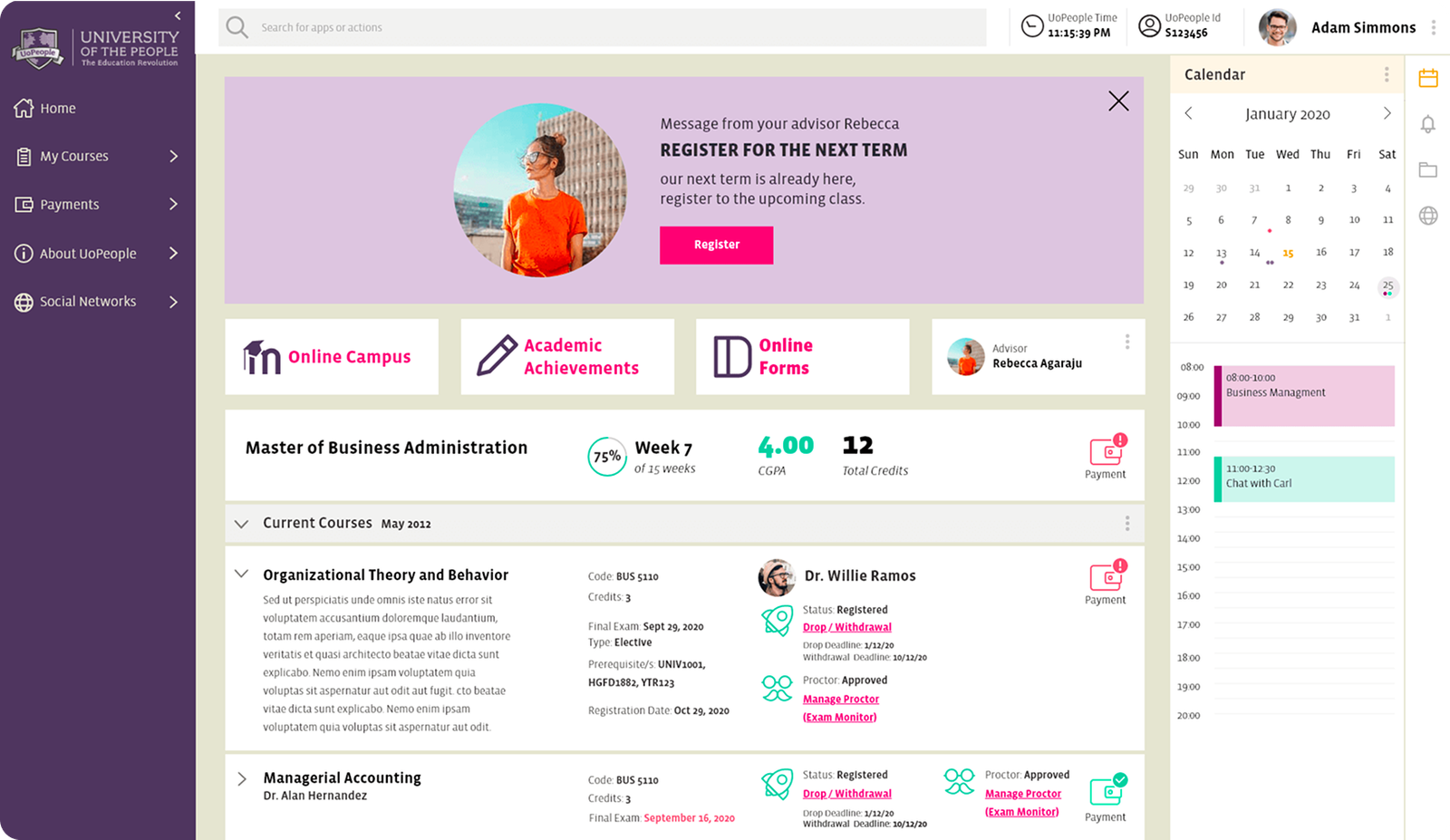
Transitioning from paper to digital wireframes clarified how the redesign could alleviate user challenges and enhance the user experience.
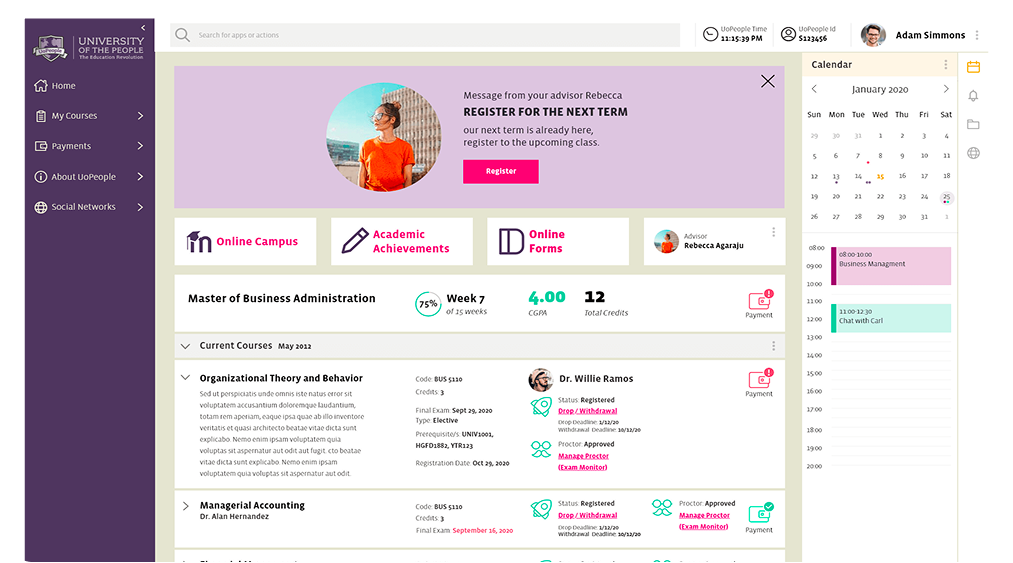
Strategically prioritizing button placements and visual elements on the home page played a pivotal role in my approach.
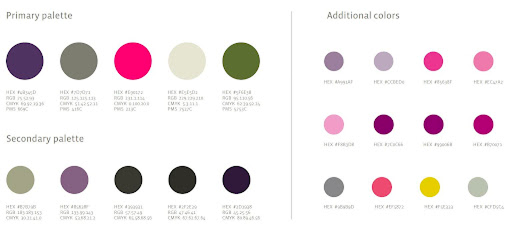
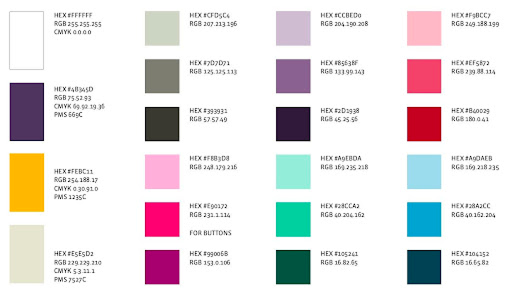
Colors at Uopeople aren’t just hues; they’re emotions on a canvas. From welcoming brights to cozy tones, each color tells a story of warmth and connection. It’s not just about what you see; it’s about how you feel. Every color is a brushstroke, creating an atmosphere of good vibes and homey comfort.
We tried out different looks, tweaking the colors and putting the spotlight on “People” to shout out that we’re the gateway to higher education.
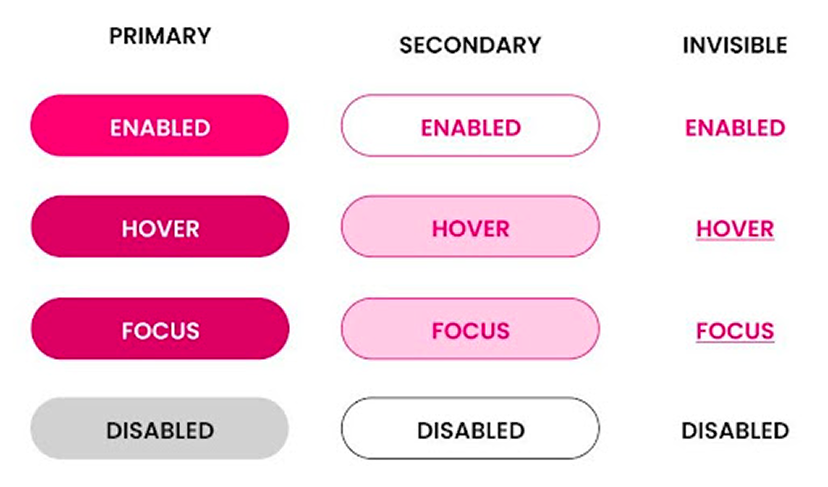
We revamped our buttons to make sure your experience is top-notch and super easy.