IDAN SHADI
AppCard
UX/UI Designer
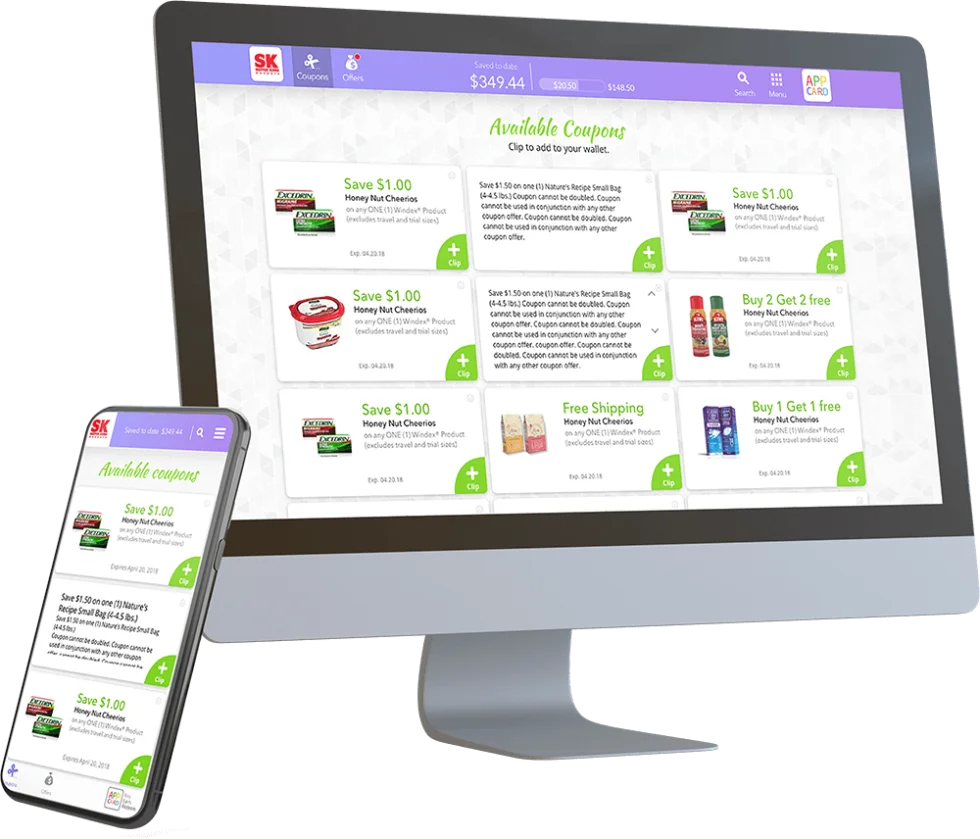
AppCard
Designing a Data-Driven Loyalty & Engagement Platform
A UX case study focused on research-led design decisions and customer-centric storytelling to bridge the gap between retail businesses and shoppers.
Role
- UX/UI Designer
Duration
- Jan 2019 – Sep 2019
Platform
- Web & Mobile Apps
Problem
Traditional retail sales lack effective methods to analyze customer behavior and target marketing efforts. Businesses struggle to maximize customer lifetime value and face challenges in reaching their target audience with personalized offers.
The goal
The goal of the project was to leverage data-driven marketing strategies and create a user-centric design solution that would empower businesses to analyze customer behavior, target specific demographics, and motivate customers to increase their lifetime value.
My role
UX/UI Lead Designer at AppCard, responsible for user-centered web and mobile experiences, research, prototyping, and design implementation for business growth.
Responsibility
Responsible for leading UX/UI design projects, conducting user research, creating prototypes, and ensuring seamless design implementation for AppCard's global data-driven marketing platform.
01.CONTEXT/PROBLEM STATEMENT
The Loyalty Disconnect
Traditional retail loyalty programs create friction on both sides of the counter.
For Businesses
The Merchant Challenge
Black Box Customer Data
Merchants struggle to understand who their best customers are. Data is fragmented across POS systems and paper coupons, making actionable insights impossible.
Blind Targeting
Without behavioral data, marketing campaigns are generic "spray and pray" efforts. Businesses can't measure ROI or effectiveness.
For Customers
The User Friction
Complex & Irrelevant
Users feel overwhelmed by complicated reward structures and receive offers for products they never buy.
Invisible Rewards
"Do I have points?" Physical punch cards get lost, and digital balances are hard to find, leading to missed redemption opportunities.
Understanding the user
User survey Questions
The survey questions were designed to gather insights on customers' experiences with loyalty programs, their preferences for rewards and communication, and their suggestions for improvements. Some of the key questions included:
Survey questions
- How frequently do you use loyalty programs or customer reward systems?
- What factors influence your decision to participate in a loyalty program??
- How satisfied are you with your current experience with loyalty programs?
- What types of rewards or incentives are most appealing to you?
- How do you prefer to receive communication from loyalty programs?
- What challenges or frustrations have you encountered with existing loyalty programs?
- Are there any features or functionalities you would like to see in a loyalty program?
- How likely are you to recommend a business with a well-designed loyalty program to others?
Phase 01
Research & Discovery
Understanding the Ecosystem
Bridging the gap between merchant needs and customer expectations through mixed-method research.
Research Goals
Loyalty Interaction
Understand how users currently engage with loyalty programs and digital rewards.
Identify Friction
Pinpoint usability issues in reward tracking, coupon clipping, and redemption flows.
Purchase Motivation
Discover intrinsic and extrinsic motivators driving repeat purchases and brand loyalty.
Data Usage Analysis
Learn how merchants collect, interpret, and act upon customer behavioral data.
Research Goals
User Surveys
Distributed to active loyalty users to quantify expectations, behavior patterns, and top frustrations.
Stakeholder Interviews
In-depth sessions with marketing managers to uncover business challenges in retention.
Competitive Analysis
Review of existing platforms to identify usability gaps, feature parity, and missed opportunities.
Task Analysis
Breakdown of core workflows like clipping coupons to identify specific friction points.
Key Research Insights
Analyzing survey data and interviews revealed six consistent patterns shaping the loyalty experience.
Purchase Influence
Most users actively participate in loyalty programs and consider them a major influential factor in their purchasing decisions.
Personalization Value
Users value personalized rewards significantly more than generic, one-size-fits-all discounts, driving higher redemption rates.
Tracking Friction
Difficulty tracking points balances and reward eligibility is a primary friction point that suppresses ongoing engagement.
Relevance & Trust
Irrelevant offers erode trust. Users expect offers to match their shopping habits and feel frustrated by generic spam.
Digital Preference
Mobile apps and email are the overwhelmingly preferred channels for updates, replacing physical cards and mailers.
Brand Advocacy
Positive, frictionless loyalty experiences significantly increase the likelihood of users recommending the brand to others.
Research Synthesis
PROBLEM IDENTIFICATION
User Pain Points
Three critical friction areas were identified that reduce engagement and customer lifetime value.
Program Complexity
Users feel overwhelmed by unclear rules, complicated reward structures, and hidden conditions. The "mental math" required to participate is too high.
User Quote
"I never know how many points I actually need or what they're worth."
Tracking Challenges
Many users struggle to monitor points, redemption eligibility, and coupon expiration. The lack of visibility leads to missed rewards and frustration.
User Quote
"I constantly lose points because I don't know when they expire."
Irrelevant Promotions
Generic "spray and pray" campaigns fail to align with user preferences. Receiving offers for products they never buy erodes trust.
User Quote
"Why send me dog food coupons when I only buy cat food?"

How might we create a loyalty platform that feels simple, transparent, and personalized?
User Persona
Problem statement:
Mark Thompson is a marketing manager who needs a comprehensive customer loyalty and engagement platform like AppCard because the lack of an effective loyalty program and customer insights hinders his ability to drive customer retention, increase repeat purchases, and make data-driven marketing decisions.

Name
Mark Thompson
- Age: 32
- Occupation: Marketing Manager
"I want to implement a loyalty program that not only rewards our customers but also drives long-term loyalty and helps us better understand our customers' needs and preferences."
Background: Mark Thompson is a marketing manager at a retail company. He is responsible for driving customer engagement and increasing sales through various marketing initiatives, including loyalty programs. Mark is tech-savvy and always on the lookout for innovative solutions to improve customer loyalty and drive business growth.
Goals
- Increase customer retention and loyalty
- Drive repeat purchases and increase customer lifetime value
- Gain valuable insights into customer behavior and preferences
Behaviours and Preferences:
- Mark is proactive in exploring new technologies and marketing trends to stay ahead of the competition
- He is data-driven and believes in using analytics to make informed decisions for marketing campaigns.
Pain points
- Designing and implementing an effective loyalty program
- Engaging customers and keeping them actively participating in the program
- Identifying and leveraging data to personalize offers and promotions
User Journey Map
Drive customer loyalty and revenue growth through AppCard's data-driven marketing platform, delivering personalized experiences and maximizing customer lifetime value.
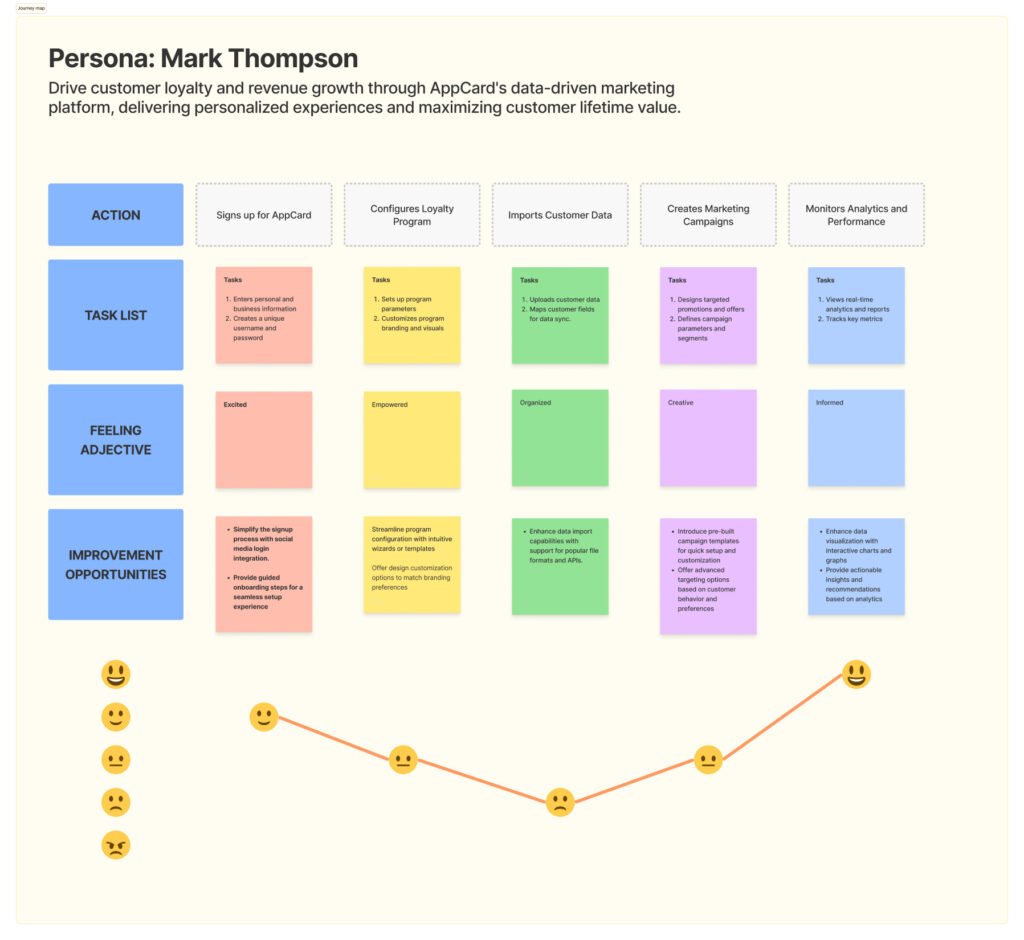
User Journey
Mark Thompson • Marketing Manager
Campaign Workflow
STEP 01
Review Data
Analyzes customer segments and recent purchase behaviors to identify opportunities.
STEP 02
Select Type
Chooses between points multiplier, discount coupon, or cash-back offer templates.
STEP 03
Targeting
Filters audience by "At Risk" or "Top Spenders" to ensure relevance.
STEP 04
Launch
Schedules the campaign distribution via Mobile App Push and Email channels.
STEP 05
Monitor
Tracks open rates, redemption metrics, and attributed revenue in real-time.
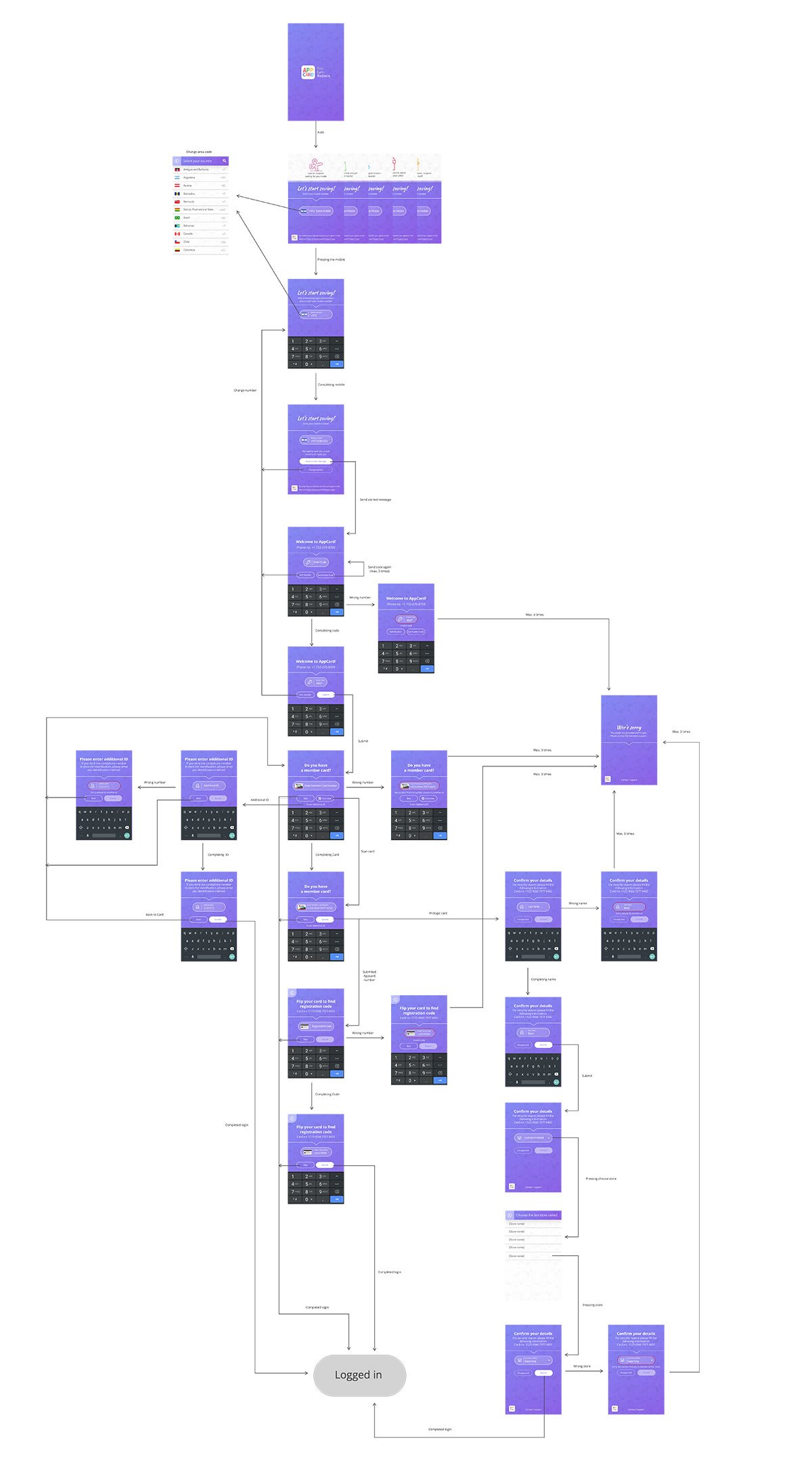
Starting the design
Mock Ups
Early designs allowed for some customization, but after the usability studies I revised the design so users can use app easily

Accessibility considerations
Provided access to users who are vision impaired through adding alt text to images for screen readers..
Used icons to help make navigation easier..
Used high color contrast in the design.
Campaign Workflow
Conclusion
/ Project Retrospective
Learnings & Next Steps
Reflecting on the design journey and outlining the roadmap for future platform evolution.
Key Takeaways
Research-Led Impact
The project reinforced that intuitive design is born from deep user understanding. Investing time in discovery prevented costly rework during the visual phase.
Ecosystem Balance
Designing for a two-sided marketplace required balancing merchant data needs with consumer simplicity. Success lay in hiding complexity, not removing functionality.
Future Roadmap
01
Usability Testing
Conduct post-launch testing to validate the new redemption flow and identify any remaining friction points in the real-world environment.
02
Expand Personalization
Move beyond basic segmentation. Implement dynamic UI content that adapts to user shopping times and category preferences.
03
Predictive Insights
Leverage behavioral data to provide merchants with AI-driven suggestions for campaign timing and reward values.